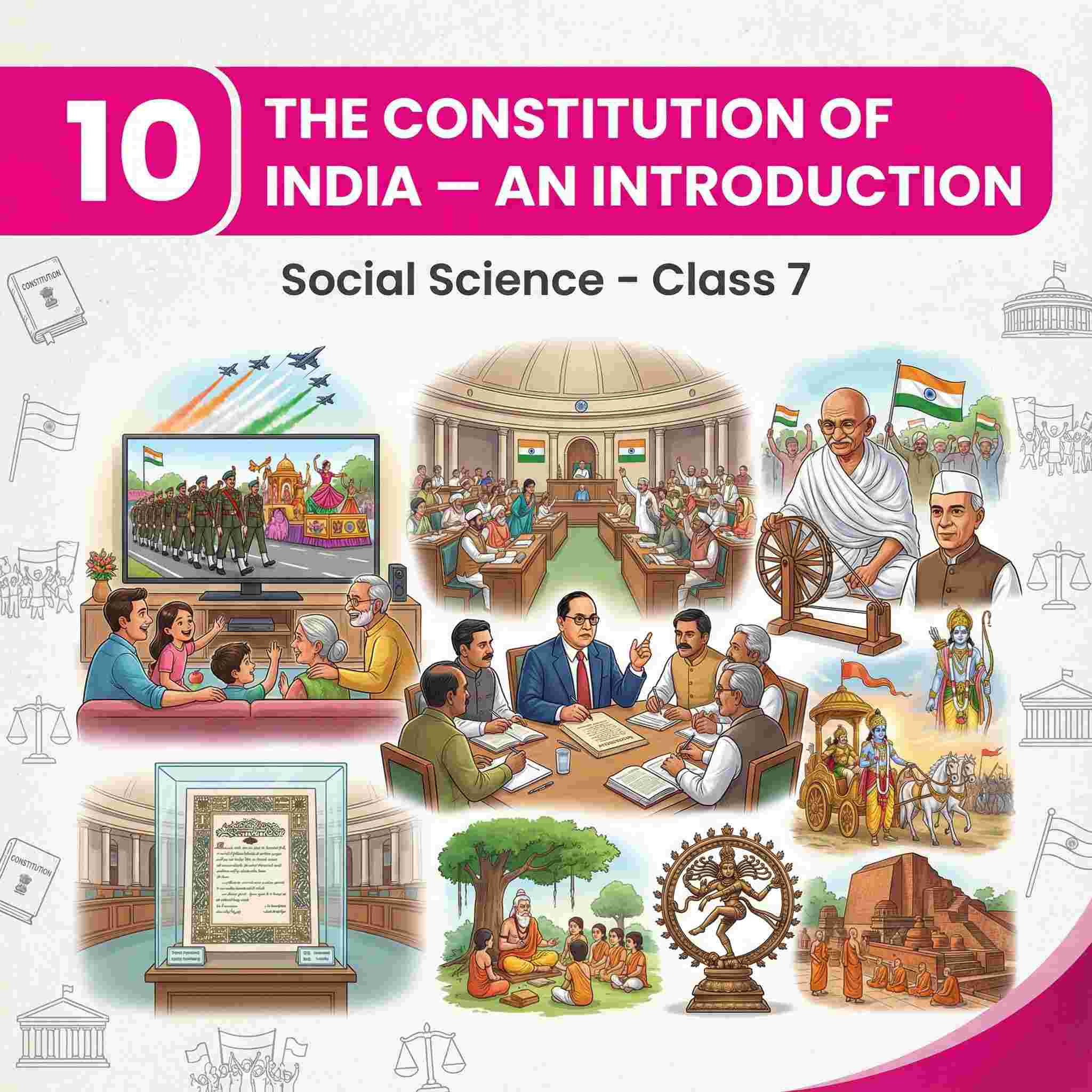
Class 7 Social Science Chapter 10: The Constitution of India – An Introduction | Need for a Constitution, Making of the Indian Constitution, Key Features, Values & Organs of Government
Complete Chapter 10 guide: what a constitution is and why every country needs one, Constitution as the “rulebook” for the nation (kabaddi example), structure of the Indian Constitution (largest written constitution, parts and schedules), key contents—values and ideals, rights and duties, political system, organs of government and their powers, making of the Constitution by the Constituent Assembly (1946–49) with Dr Rajendra Prasad and Drafting Committee under Dr B.R. Ambedkar, and how freedom struggle and civilisational heritage shaped its core principles, with summary, Q&A, extra questions and quiz for CBSE Exam
Updated : 6 months ago
Categories: Class 7 Social Science, NCERT Notes 2025, Civics & Constitution, Indian Democracy & Governance, Making of the Constitution, CBSE Exam Preparation, Q&A and Quizzes
 View Complete Article

