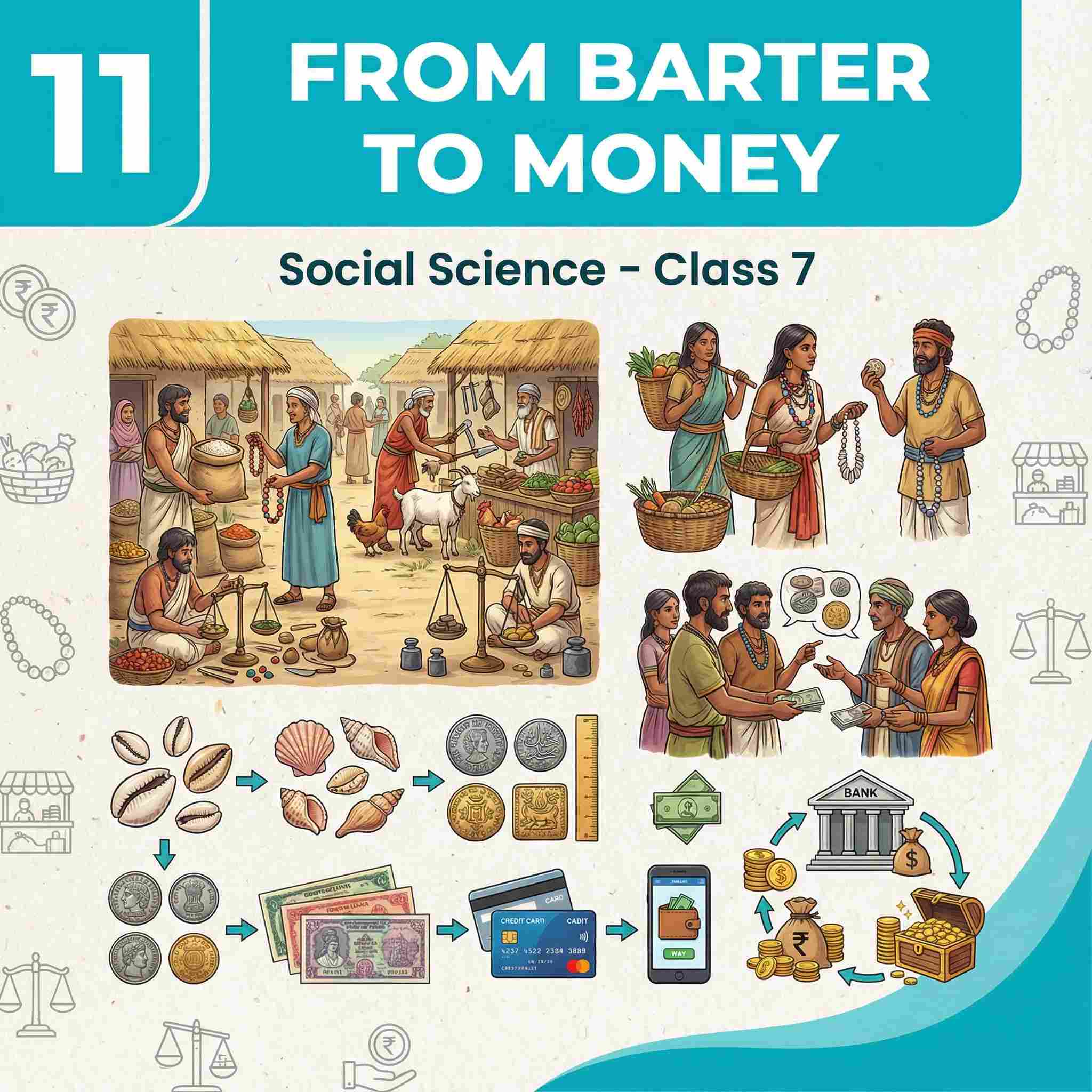
Class 7 Social Science Chapter 11: From Barter to Money | Barter System Problems, Need for Money, Double Coincidence of Wants, Properties & Forms of Money
Complete Chapter 11 guide: how people exchanged goods in the barter system, real problems like double coincidence of wants, lack of standard value, divisibility, portability and durability, why money was invented as a common medium of exchange, early “money” objects (cowries, salt, cattle, metal objects, Rai stones, feather coils), and how modern money includes coins, notes and digital payments, with story-based examples (farmer, Junbeel Mela) plus summary, Q&A, extra questions and quiz for CBSE Exam
Updated : 6 months ago
Categories: Class 7 Social Science, NCERT Notes 2025, Economic Life Around Us, Money and Barter, Basic Economics for Class 7, CBSE Exam Preparation, Q&A and Quizzes
 View Complete Article

