Complete Solutions and Summary of Arts of the People, With the People, For the People – NCERT Class 8, Arts, Chapter 18 – Summary, Questions, Answers, Extra Questions
Detailed summary and explanation of Chapter 18 ‘Arts of the People, With the People, For the People’ with all question answers, extra questions, and solutions from NCERT Class VIII, Arts (Kriti).
Updated: 9 months ago
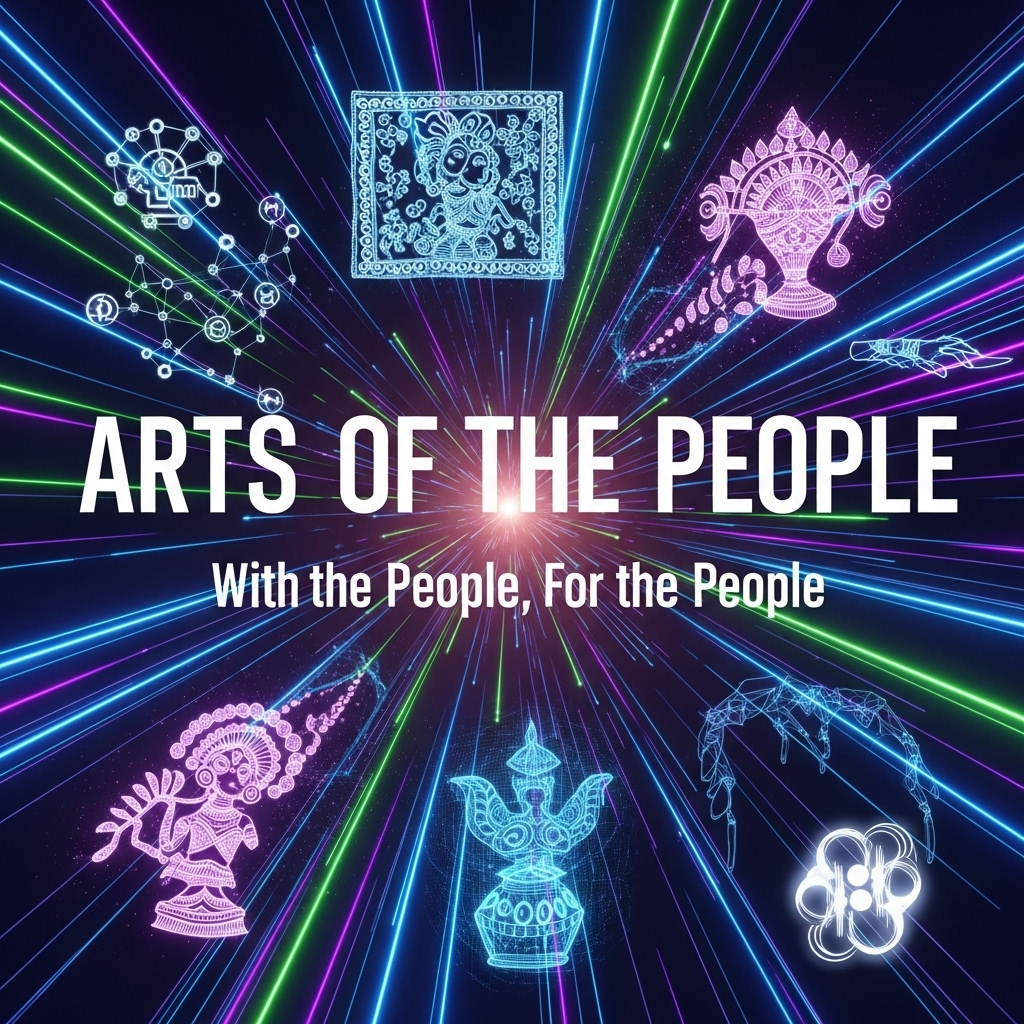
Arts of the People, With the People, For the People
Chapter 18: Visual Arts
Complete Study Guide with Interactive Learning
Chapter Overview
What You'll Learn
Art in Daily Life
Explore how art is integrated into everyday objects like clothes and plates.
Traditional Techniques
Learn about techniques like twisting, knotting, and weaving used in art.
Living Root Bridges
Discover the unique art of training roots in Meghalaya to form bridges.
Artist Dedication
Appreciate the hard work of artists preserving these traditions.
Historical Context
Art has been a part of human life since prehistoric times, connecting us to our ancestors through artefacts. The chapter highlights how innovations in materials and social changes influence art, with a focus on Meghalaya's living root bridges as a sustainable art practice.
Key Highlights
The chapter introduces everyday materials like thread, paper, and cloth transformed into art through dedication, with the living root bridges showcasing nature's role in artistic expression.


As an Amazon Associate, ProSyllabus earns from qualifying purchases. Prices shown are subject to change.
Test your CBSE Class 8 Annual Assessment prep
Dual AI-verified questions Real exam pattern First quiz free
Class 8 Science — Exploring Forces (Practice Quiz)
Class 8 Science — Health: The Ultimate Treasure (Practice Quiz)
Class 8 Science — The Invisible Living World: Beyond Our Naked Eye (Practice Quiz)
Class 8 Maths — A Story of Numbers (Practice Quiz)
Class 8 Science — Exploring the Investigative World of Science (Practice Quiz)
Class 8 English — Wit and Wisdom (Practice Quiz)
Class 8 Hindi — स्वदेश (Practice Quiz)
Class 8 Science — Particulate Nature of Matter (Practice Quiz)
Direct and Indirect Speech Advanced Challenge | CBSE Class 8 Annual Assessment
Class 8 Hindi — तरुण के स्वप्न (Practice Quiz)
Class 8 Hindi — आदमी का अनुपात (Practice Quiz)
Class 8 Hindi — नए मेहमान (Practice Quiz)
Class 8 Hindi — मत बाँधो (Practice Quiz)
Class 8 Hindi — एक टोकरी भर मिट्टी (Practice Quiz)
Class 8 Hindi — कबीर के दोहे (Practice Quiz)
Class 8 Hindi — हरिद्वार (Practice Quiz)
Class 8 Hindi — एक आशीर्वाद (Practice Quiz)
Class 8 Hindi — दो गौरैया (Practice Quiz)
Class 8 Sanskrit — धातुरूपाणि (परिशिष्टम् ३) (Practice Quiz)
Class 8 Sanskrit — शब्दरूपाणि (परिशिष्टम् २) (Practice Quiz)
Class 8 Sanskrit — व्याकरणम् (परिशिष्टम् १) (Practice Quiz)
Class 8 Sanskrit — वर्णोच्चारण-शिक्षा १ (Practice Quiz)
Class 8 Sanskrit — सम्यग्वर्णप्रयोगेण ब्रह्मलोके महीयते (Practice Quiz)
Class 8 Sanskrit — सन्निमित्ते वरं त्यागः (ख-भागः) (Practice Quiz)
Class 8 Sanskrit — सन्निमित्ते वरं त्यागः (क-भागः) (Practice Quiz)
Class 8 Sanskrit — कोऽरुक् ? कोऽरुक् ? कोऽरुक् ? (Practice Quiz)
Class 8 Sanskrit — पश्यत कोणमैशान्यं भारतस्य मनोहरम् (Practice Quiz)
Class 8 Sanskrit — मञ्जुलमञ्जूषा सुन्दरसुरभाषा (Practice Quiz)
Class 8 Sanskrit — डिजिभारतम् — युगपरिवर्तनम् (Practice Quiz)
Class 8 Sanskrit — गीता सुगीता कर्तव्या (Practice Quiz)
Class 8 Sanskrit — प्रणम्यो देशभक्तोऽयं गोपबन्धुर्महामनाः (Practice Quiz)
Class 8 Sanskrit — सुभाषितरसं पीत्वा जीवनं सफलं कुरु (Practice Quiz)
Class 8 Sanskrit — अल्पानामपि वस्तूनां संहतिः कार्यसाधिका (Practice Quiz)
Class 8 Sanskrit — संगच्छध्वं संवदध्वम् (Practice Quiz)
Class 8 English — Science and Curiosity (Practice Quiz)
Class 8 English — Environment (Practice Quiz)
Class 8 English — Mystery and Magic (Practice Quiz)
Class 8 English — Values and Dispositions (Practice Quiz)
Class 8 Maths — Area (Practice Quiz)
Class 8 Maths — Tales by Dots and Lines (Practice Quiz)
Class 8 Maths — Algebra Play (Practice Quiz)
Class 8 Maths — Exploring Some Geometric Themes (Practice Quiz)
Class 8 Maths — Proportional Reasoning-2 (Practice Quiz)
Class 8 Maths — The Baudhayana-Pythagoras Theorem (Practice Quiz)
Class 8 Maths — Fractions in Disguise (Practice Quiz)
Class 8 Maths — Proportional Reasoning-1 (Practice Quiz)
Class 8 Maths — We Distribute, Yet Things Multiply (Practice Quiz)
Class 8 Maths — Number Play (Practice Quiz)
Class 8 Maths — Quadrilaterals (Practice Quiz)
Class 8 Maths — Power Play (Practice Quiz)
Class 8 Maths — A Square and A Cube (Practice Quiz)
Class 8 Science — Our Home: Earth, a Unique Life Sustaining Planet (Practice Quiz)
Class 8 Science — How Nature Works in Harmony (Practice Quiz)
Class 8 Science — Keeping Time with the Skies (Practice Quiz)
Class 8 Science — Light: Mirrors and Lenses (Practice Quiz)
Class 8 Science — The Amazing World of Solutes, Solvents, and Solutions (Practice Quiz)
Class 8 Science — Nature of Matter: Elements, Compounds, and Mixtures (Practice Quiz)
Class 8 Science — Pressure, Winds, Storms, and Cyclones (Practice Quiz)
Class 8 Science — Electricity: Magnetic and Heating Effects (Practice Quiz)
Geography: Resources and Development Practice Quiz | CBSE Class 8 Annual Assessment
Civics: Social and Political Life III Practice Quiz | CBSE Class 8 Annual Assessment
English (Honeydew / It So Happened) Practice Quiz | CBSE Class 8 Annual Assessment
Hindi (Vasant / Bharat Ki Khoj / Sanshipt Budhcharit) Practice Quiz | CBSE Class 8 Annual Assessment
Comparing Quantities and Percentages Practice Quiz | CBSE Class 8 Annual Assessment
The Indian Constitution Fundamentals | CBSE Class 8 Annual Assessment
Crop Production and Management Fundamentals | CBSE Class 8 Annual Assessment
Rational Numbers Operations Fundamentals | CBSE Class 8 Annual Assessment
Group Discussions
No forum posts available.


