GATE Mechanical Engineering 2026: Exam Dates, Syllabus Weightage, and PSU Strategy
Master the ME Paper: In-depth analysis of Thermodynamics, Design, and Manufacturing for 2026.
Updated: 6 months ago
Categories: GATE Exam, Mechanical Engineering, PSU Jobs

GATE 2026 ME Exam Timeline
IIT Guwahati has scheduled the Mechanical Engineering (ME) paper for the second Saturday of the window. Due to the massive number of applicants, the exam is split into two sessions to ensure fair normalization.
Event
Official Date / Time
Admit Card Release
January 13, 2026
ME Session 1 (Forenoon)
February 14, 2026 (9:30 AM)
ME Session 2 (Afternoon)
February 14, 2026 (2:30 PM)
Result Declaration
March 19, 2026
Exam Pattern & Question Types
The paper consists of 65 questions totaling 100 marks. Success in Mechanical Engineering depends on your ability to handle complex numerical problems (NAT) which form a large portion of the technical marks.
• MCQ (Multiple Choice): Standard 1 or 2 mark questions with 1/3 or 2/3 negative marking.
• MSQ (Multiple Select): One or more options can be correct. No negative marking. Frequently used in theory-heavy subjects like Material Science.
• NAT (Numerical Answer): Precise digits required. No negative marking. Dominates the Thermal and Design sections.
Major Marks Distribution
Mechanical Engineering is broadly categorized into four sections. Manufacturing and Thermal sciences usually carry the highest technical weightage.
Section
Expected Marks
Weightage %
General Aptitude
15 Marks
15%
Engineering Mathematics
13 Marks
13%
Applied Mechanics & Design
~24 Marks
~24%
Fluid Mechanics & Thermal
~26 Marks
~26%
Manufacturing & Industrial
~22 Marks
~22%
Core Syllabus Focus Areas
To target an AIR under 500, focus on these technical "Big Three" pillars:
1. Manufacturing Engineering (14-16 Marks): Casting, Welding, Machining, and Metrology. This is the most scoring part of the paper.
2. Thermodynamics & Applications (10-12 Marks): Laws of Thermodynamics, Cycles (Rankine, Otto, Diesel), and Refrigeration.
3. Theory of Machines & Design (12-14 Marks): Mechanisms, Vibrations, and Design of Machine Elements like Gears and Bearings.
4. Fluid Mechanics (8-10 Marks): Properties, Fluid Statics, and Bernoulli’s equation.
How Your Score is Calculated
Since Mechanical is a multi-session paper, IIT Guwahati uses a Normalization Formula to ensure candidates from different sessions are graded fairly based on the relative difficulty of their session.
$$Score = S_q + (S_t - S_q)\frac{M - M_q}{\overline{M}_t - M_q}$$
M: Normalized marks | Mq: Qualifying marks | Mt: Mean of top 0.1% performers.
Success Roadmap for 2026
1. Master Engineering Math & Aptitude: These 28 marks are standard. Securing 25+ here is the difference between a good rank and a PSU-worthy rank.
2. Numerical Speed: Practice NATs for Thermodynamics and Vibrations using the virtual calculator daily.
3. Revision of IS Codes & Standards: For Machine Design, keep a list of standard formulas and bolt/gear specifications.
4. PYQ Drills (2012-2025): Mechanical questions often follow established patterns. Solve the last 15 years of papers to understand IIT Guwahati's question-setting style.
Official Links & Reference Portals
Refer to the official portal for mock tests and syllabus PDFs:
Recommended BooksSee All →
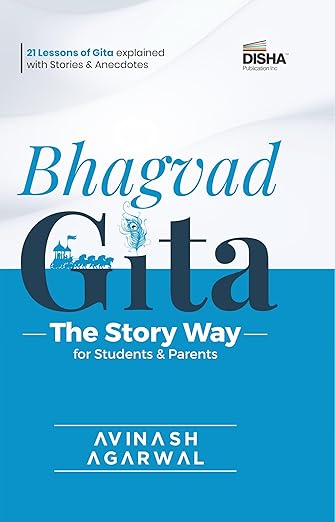
35% OFF
Bhagvad Gita – The Story Way for Students & Parents
₹194M.R.P. ₹299
Buy on Amazon

34% OFF
You Can – The Classic Guide to Self-Belief & Personal Growth
₹99M.R.P. ₹149
Buy on Amazon

Atomic Habits – Tiny Changes, Remarkable Results
₹521
Buy on Amazon
As an Amazon Associate, ProSyllabus earns from qualifying purchases. Prices shown are subject to change.
Practice Quiz
Test your GATE Mechanical Engineering prep
Dual AI-verified questions Real exam pattern 2 quizzes free, then 10 credits per quiz
#1
Refrigeration & Air Conditioning Practice Quiz | GATE Mechanical Engineering
10 Qs · ~10 min
3.5/10avg score
4/10best
#2
Heat Transfer: Conduction Practice Quiz | GATE Mechanical Engineering
10 Qs · ~10 min
2/10avg score
2/10best
#3
Engineering Mechanics: Statics Fundamentals | GATE Mechanical Engineering
10 Qs · ~10 min
4/10avg score
4/10best
#4
Fluid Mechanics Basics Fundamentals | GATE Mechanical Engineering
10 Qs · ~10 min
5/10avg score
5/10best

Group Discussions
No forum posts available.


