JEE Mains Exam Day Tips 2026: Strategy, Checklist, and Time Management Guide
Master the JEE Mains with expert tips on subject-wise time allocation, CBT navigation, and the ultimate night-before checklist.
Updated: 6 months ago
Categories: Entrance Exams, Education Guide, Competitive Exams

JEE Mains Exam Day Strategy: The Ultimate Survival Guide
Navigating the high-pressure environment of NTA's premier engineering entrance.
The T-Minus 12 Hours Phase
The JEE Mains isn't just a test of knowledge; it's a test of nerves. Stop studying by 8:00 PM the night before. Your brain needs to move from 'absorption mode' to 'retrieval mode'.
Admit Card (Color print preferred)
Valid ID Proof (Aadhar/Passport)
Passport size photos (same as uploaded)
Managing the CBT (Computer Based Test) Interface
Many students lose time simply clicking buttons. Remember:
- Save & Next: Your answer is only counted if you click this.
- Mark for Review: Use this sparingly. If you solve it but aren't 100% sure, mark it, but ensure you've selected an option if there's no negative marking (for specific sections).
Subject-Wise Time Allocation
Chemistry (30-40 Mins): Start here. It's the "confidence booster." Inorganic questions are usually direct—either you know it or you don't.
Physics (50-60 Mins): Focus on formula-based applications first. Save the lengthy Modern Physics or Electromagnetism calculations for the second pass.
Mathematics (70-80 Mins): Usually the lengthiest section. Don't get stuck on a single coordinate geometry or calculus problem for more than 4 minutes.
The Numerical Value Section Strategy
With the introduction of negative marking in the Section B (Numericals), precision is paramount.
- Read if the answer needs to be rounded off to the nearest integer.
- Calculation errors are the biggest "rank killers" here. Double-check your signs (+/-).
Psychological Hacks for Peak Performance
If you encounter 3-4 difficult questions in a row, don't panic. The JEE paper is designed to be variable in difficulty. Take a 10-second water break, close your eyes, and look for the next "easy" question. Every student gets the same paper—if it's tough for you, it's tough for everyone.
Recommended BooksSee All →
35% OFF
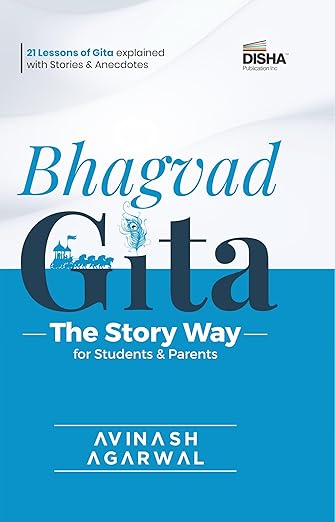
Bhagvad Gita – The Story Way for Students & Parents
₹194M.R.P. ₹299
Buy on Amazon

34% OFF
You Can – The Classic Guide to Self-Belief & Personal Growth
₹99M.R.P. ₹149
Buy on Amazon

Atomic Habits – Tiny Changes, Remarkable Results
₹521
Buy on Amazon
As an Amazon Associate, ProSyllabus earns from qualifying purchases. Prices shown are subject to change.
Practice Quiz
Test your JEE Main prep
Dual AI-verified questions Real exam pattern 2 quizzes free, then 10 credits per quiz
#1
Kinematics & Projectile Motion Fundamentals | JEE Main
10 Qs · ~10 min
3.4/10avg score
7/10best
#2
Work, Energy & Power Fundamentals | JEE Main
10 Qs · ~10 min
3/10avg score
4/10best
#3
Organic Reactions: Named Reactions Advanced Challenge | JEE Main
10 Qs · ~10 min
#4
Differential Equations Advanced Challenge | JEE Main
10 Qs · ~10 min
#5
Mole Concept & Stoichiometry Fundamentals | JEE Main
10 Qs · ~10 min
1/10avg score
1/10best
#6
JEE Main — Complex Numbers
10 Qs · ~10 min
#7
JEE Main — Chemical Equilibrium
10 Qs · ~10 min
#8
JEE Main — Rotational Motion
10 Qs · ~10 min
#9
JEE Main Mathematics — Limits, Continuity & Differentiation
10 Qs · ~10 min
#10
JEE Main Physics — Kinematics & Laws of Motion
10 Qs · ~10 min
Group Discussions
No forum posts available.


