Complete Summary and Solutions for Film-making – NCERT Class XII KALEIDOSCOPE English Elective, Chapter 3 – Non-Fiction Summary, Explanation, Questions, Answers
Detailed summary and explanation of Chapter 3 'Film-making' by Ingmar Bergman from the NCERT Class XII KALEIDOSCOPE English Elective textbook non-fiction section, discussing the director's insights into the making of films, childhood influences, the rhythm and challenges of filmmaking, and the relationship of film to other arts—with all NCERT questions and answers.
Updated: 8 months ago

Why the Novel Matters
D.H. Lawrence | Kaleidoscope Non-Fiction - Ultimate Study Guide 2025
Introduction to Non-Fiction - Kaleidoscope
Non-fiction is virtually everything that we read as literature but that does not come under the categories of novel, short story, play or poem. Non-fiction, then, is writing that is factually true. It can include articles, editorials, reports, critical essays and interviews, humorous sketches, biographies and autobiographies, lectures, speeches and sermons.
This section contains six non-fiction pieces, three by established writers of the canon: George Bernard Shaw, Virginia Woolf and D.H. Lawrence; one each by Ingmar Bergman, Amartya Sen and Isaac Asimov.
The themes are: freedom, stream of consciousness, importance of the novel as a creative form, the details that make film-making a creative art and the argumentative tradition in Indian culture based on the famous dialogue between Krishna and Arjuna in the Bhagavad Gita. Asimov’s piece talks of the universe of science fiction, correlating it to accounts of mythical superhuman beings in the pre-scientific universe which served to fulfil the same emotional needs as science fiction does.
The purpose of such writing is to explain, analyse, define or clarify something—to provide us with information and to show the how and why of things.
Key Elements of Non-Fiction
- Factual Truth: Grounded in reality, unlike imaginative fiction.
- Forms: Essays, speeches, biographies—aim to inform, persuade, or provoke thought.
- Themes Here: Novel's supremacy (Lawrence: wholeness of life; tremulations on ether).
- Canon Writers: Lawrence's rebellious prose celebrates body's aliveness over abstractions.
Points to Ponder
- How does Lawrence's view of the novel as life resonate with modern storytelling in films/series?
- Does rejecting absolutes align with today's fluid identities?
- Why does non-fiction often use personal anecdotes to make abstract concepts relatable?
Reprint 2025-26
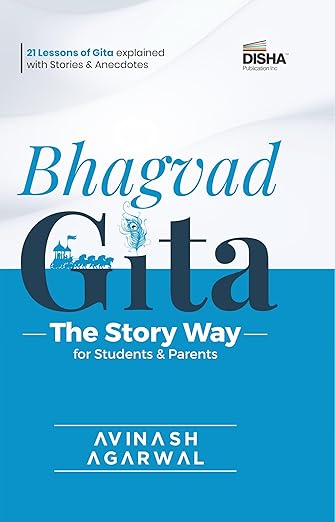


As an Amazon Associate, ProSyllabus earns from qualifying purchases. Prices shown are subject to change.
Test your CBSE Class 12 Board Examination prep
Dual AI-verified questions Real exam pattern 2 quizzes free, then 10 credits per quiz
The Last Lesson
Economics (Class 12) Practice Quiz | CBSE Class 12 Board Examination
Matrices
Challenges of Nation Building
Human Geography: Nature and Scope
Money and Banking
The End of Bipolarity
Bricks, Beads and Bones — The Harappan Civilisation
Inverse Trigonometric Functions
The Enemy
Keeping Quiet
My Mother at Sixty-six
Poets and Pancakes
The Rattrap
Lost Spring
Introducing Indian Society
Security in the Contemporary World
Tertiary and Quaternary Activities
Secondary Activities
Kings, Farmers and Towns — Early States and Economies (c. 600 BCE-600 CE)
Theory of Consumer Behaviour
Introduction
Staffing
Nature and Significance of Management
Continuity and Differentiability
Determinants
Relations and Functions
Principles of Inheritance and Variation
Reproductive Health
Human Reproduction
Chemical Kinetics
Solutions
Principles of Management
Accountancy (Class 12) Practice Quiz | CBSE Class 12 Board Examination
Electrostatic Potential and Capacitance Fundamentals | CBSE Class 12 Board Examination
Memories of Childhood
On the Face of It
Journey to the End of the Earth
The Tiger King
The Third Level
Aunt Jennifer's Tigers
A Roadside Stand
A Thing of Beauty
An Elementary School Classroom in a Slum
Going Places
The Interview
Indigo
Deep Water
Social Influence and Group Processes
Attitude and Social Cognition
Therapeutic Approaches
Psychological Disorders
Meeting Life Challenges
Self and Personality
Variations in Psychological Attributes
Social Movements
Mass Media and Communications
Globalisation and Social Change
Change and Development in Industrial Society
Change and Development in Rural Society
The Constitution and Social Change
Cultural Change
Structural Change
The Challenges of Cultural Diversity
Patterns of Social Inequality and Exclusion
The Market as a Social Institution
Social Institutions: Continuity and Change
The Demographic Structure of the Indian Society
Recent Developments in Indian Politics
Regional Aspirations
The Crisis of Democratic Order
Challenges to and Restoration of the Congress System
India's External Relations
Politics of Planned Development
Era of One-party Dominance
Environment and Natural Resources
International Organisations
Contemporary South Asia
Contemporary Centres of Power
Geographical Perspective on Selected Issues and Problems
Planning and Sustainable Development in the Indian Context
Mineral and Energy Resources
Water Resources
Land Resources and Agriculture
Human Settlements
Population: Distribution, Density, Growth and Composition
International Trade (India)
Transport and Communication (India)
Primary Activities
Human Development
The World Population: Distribution, Density and Growth
Framing the Constitution — The Beginning of a New Era
Mahatma Gandhi and the Nationalist Movement — Civil Disobedience and Beyond
Rebels and the Raj — The Revolt of 1857 and its Representations
Colonialism and the Countryside — Exploring Official Archives
Peasants, Zamindars and the State — Agrarian Society and the Mughal Empire (c. sixteenth-seventeenth centuries)
An Imperial Capital: Vijayanagara (c. fourteenth to sixteenth century)
Bhakti-Sufi Traditions — Changes in Religious Beliefs and Devotional Texts (c. eighth to eighteenth century)
Through the Eyes of Travellers — Perceptions of Society (c. tenth to seventeenth century)
Thinkers, Beliefs and Buildings — Cultural Developments (c. 600 BCE-600 CE)
Kinship, Caste and Class — Early Societies (c. 600 BCE-600 CE)
Open Economy Macroeconomics
Government Budget and the Economy
Determination of Income and Employment
National Income Accounting
Market Equilibrium
The Theory of the Firm under Perfect Competition
Production and Costs
Consumer Protection
Marketing
Financial Management
Controlling
Directing
Organising
Planning
Business Environment
Cash Flow Statement
Accounting Ratios
Analysis of Financial Statements
Financial Statements of a Company
Issue and Redemption of Debentures
Accounting for Share Capital
Dissolution of Partnership Firm
Reconstitution of a Partnership Firm – Retirement/Death of a Partner
Reconstitution of a Partnership Firm – Admission of a Partner
Accounting for Partnership: Basic Concepts
Probability
Linear Programming
Three Dimensional Geometry
Vector Algebra
Differential Equations
Application of Integrals
Integrals
Application of Derivatives
Biodiversity and its Conservation
Ecosystem
Organisms and Populations
Biotechnology and its Applications
Biotechnology: Principles and Processes
Microbes in Human Welfare
Human Health and Disease
Evolution
Molecular Basis of Inheritance
Sexual Reproduction in Flowering Plants
Biomolecules
Amines
Aldehydes, Ketones and Carboxylic Acids
Alcohols, Phenols and Ethers
Haloalkanes and Haloarenes
Coordination Compounds
The d- and f-Block Elements
Electrochemistry
Semiconductor Electronics: Materials, Devices and Simple Circuits
Nuclei
Atoms
Dual Nature of Radiation and Matter
Wave Optics
Ray Optics and Optical Instruments
Electromagnetic Waves
Alternating Current
Electromagnetic Induction
Magnetism and Matter
Moving Charges and Magnetism
Electrostatic Potential and Capacitance
Electric Charges and Fields
CBSE Class 12 — Genetics and Evolution
CBSE Class 12 — Matrices and Determinants
CBSE Class 12 — Solutions and Colligative Properties
Current Electricity
CBSE Class 12 — Electrostatics and Electric Field
Humanities Subjects Practice Quiz | CBSE Class 12 Board Examination
Group Discussions
No forum posts available.


