Dreaming of a seat in RVCE, PES, or MSRIT? The KCET 2026 is your golden ticket. Managed by the Karnataka Examinations Authority (KEA), this exam tests your grip on the PUC syllabus.
With no negative marking, the game is all about speed. This roadmap will guide you through the syllabus, weightage, and a "killer" 80-minute strategy for each paper.
KCET 2026 Roadmap: Crack Karnataka CET with Zero to Hero Strategy
A complete guide to the KCET 2026 exam pattern, high-weightage chapters, no-negative marking strategy, and top-tier study resources.
Updated: 6 months ago
Categories: Engineering Entrance, Karnataka Education, Career Guidance.
KCET 2026 Zero to Hero: The Ultimate Roadmap
1. KCET 2026 Exam Pattern (The Speed Game)
The exam is conducted offline (Pen & Paper) over two days. Each subject has a dedicated session.
Exam Details:
• Total Papers: 3 (PCM) or 4 (PCMB)
• Questions per paper: 60 MCQs
• Total Marks per paper: 60
• Duration: 80 Minutes per subject
The Scoring System:
• +1 for every correct answer
• 0 (NO Negative Marking) for wrong answers
Pro Tip: Since there is no penalty, never leave an OMR bubble empty. In the last 5 minutes, mark your best guesses!
Exam Details:
• Total Papers: 3 (PCM) or 4 (PCMB)
• Questions per paper: 60 MCQs
• Total Marks per paper: 60
• Duration: 80 Minutes per subject
The Scoring System:
• +1 for every correct answer
• 0 (NO Negative Marking) for wrong answers
Pro Tip: Since there is no penalty, never leave an OMR bubble empty. In the last 5 minutes, mark your best guesses!
2. High-Weightage Chapters (Focus Areas)
KCET strictly follows the 1st and 2nd PUC (Class 11 & 12) Karnataka syllabus. Focus on these heavy-hitters:
Mathematics:
• Vectors & 3D Geometry (Scoring & Direct)
• Calculus (Integration & Differentiation - ~15 Qs)
• Matrices & Determinants
Physics:
• Current Electricity & Magnetism
• Optics (Ray & Wave)
• Modern Physics (High ROI, less time)
Chemistry:
• Organic Chemistry (Named Reactions are key)
• Coordination Compounds & p-Block Elements
• Chemical Kinetics & Electrochemistry
Mathematics:
• Vectors & 3D Geometry (Scoring & Direct)
• Calculus (Integration & Differentiation - ~15 Qs)
• Matrices & Determinants
Physics:
• Current Electricity & Magnetism
• Optics (Ray & Wave)
• Modern Physics (High ROI, less time)
Chemistry:
• Organic Chemistry (Named Reactions are key)
• Coordination Compounds & p-Block Elements
• Chemical Kinetics & Electrochemistry
3. Subject-Wise Preparation Strategy
Mathematics: Focus on Shortcuts. You cannot solve 60 questions in 80 minutes using long board-exam methods. Learn to eliminate options.
Physics: Formulas are everything. Maintain a formula book and solve at least 50 numericals for each 2nd PUC chapter.
Chemistry: NCERT is your Bible. 90% of Inorganic and Organic questions come directly from NCERT lines. [Image of organic chemistry reaction mechanisms]
Physics: Formulas are everything. Maintain a formula book and solve at least 50 numericals for each 2nd PUC chapter.
Chemistry: NCERT is your Bible. 90% of Inorganic and Organic questions come directly from NCERT lines. [Image of organic chemistry reaction mechanisms]
4. Best Books for KCET 2026
• Foundation: NCERT / Karnataka PUC Textbooks (Mandatory).
• Practice: MTG KCET Fingerprints (Highly recommended).
• PYQs: Arihant’s "16 Years Solved Papers" or MTG’s Chapter-wise Solutions.
• Reference: Pradeep’s (Physics/Chemistry) and Dinesh (Maths).
• Practice: MTG KCET Fingerprints (Highly recommended).
• PYQs: Arihant’s "16 Years Solved Papers" or MTG’s Chapter-wise Solutions.
• Reference: Pradeep’s (Physics/Chemistry) and Dinesh (Maths).
5. The "80-Minute" Exam Day Strategy
• Round 1 (0-40 mins): Solve "Easy" questions you can answer in 30 seconds (Theoretical & Direct Formulae).
• Round 2 (40-70 mins): Tackle "Medium" numericals that require 1-2 minutes of calculation.
• Round 3 (Last 10 mins): Guess the "Hard" ones. Use the substitution method (plugging options into the question) to find the answer.
• Round 2 (40-70 mins): Tackle "Medium" numericals that require 1-2 minutes of calculation.
• Round 3 (Last 10 mins): Guess the "Hard" ones. Use the substitution method (plugging options into the question) to find the answer.
KCET Related Links
• KEA Official Website → cetonline.karnataka.gov.in
• Syllabus & Notifications → https://www.pw.live/state-prep/exams/kcet-syllabus
• Syllabus & Notifications → https://www.pw.live/state-prep/exams/kcet-syllabus
Recommended BooksSee All →
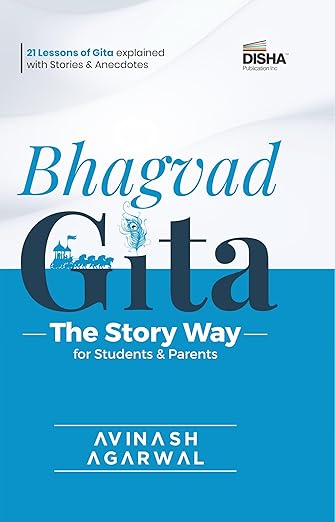
35% OFF
Bhagvad Gita – The Story Way for Students & Parents
₹194M.R.P. ₹299
Buy on Amazon

34% OFF
You Can – The Classic Guide to Self-Belief & Personal Growth
₹99M.R.P. ₹149
Buy on Amazon

Atomic Habits – Tiny Changes, Remarkable Results
₹521
Buy on Amazon
As an Amazon Associate, ProSyllabus earns from qualifying purchases. Prices shown are subject to change.
Practice Quiz
Test your KCET prep
Dual AI-verified questions Real exam pattern 2 quizzes free, then 10 credits per quiz
#1
Laws of Motion Fundamentals — Free KCET Quiz
10 Qs · ~10 min
2/10avg score
2/10best
#2
KCET — Cell Cycle and Division
10 Qs · ~10 min
#3
KCET — Human Reproduction
10 Qs · ~10 min
#4
KCET — Matrices and Determinants
10 Qs · ~10 min
#5
KCET — Thermodynamics Chemistry
10 Qs · ~10 min
#6
KCET — Coordination Compounds
10 Qs · ~10 min
#7
KCET — Chemical Kinetics
10 Qs · ~10 min
#8
KCET — Work, Energy and Power
10 Qs · ~10 min
#9
KCET — Kinematics
10 Qs · ~10 min
#10
Quadratic Equations Fundamentals — Free KCET Quiz
10 Qs · ~10 min
Group Discussions
No forum posts available.


