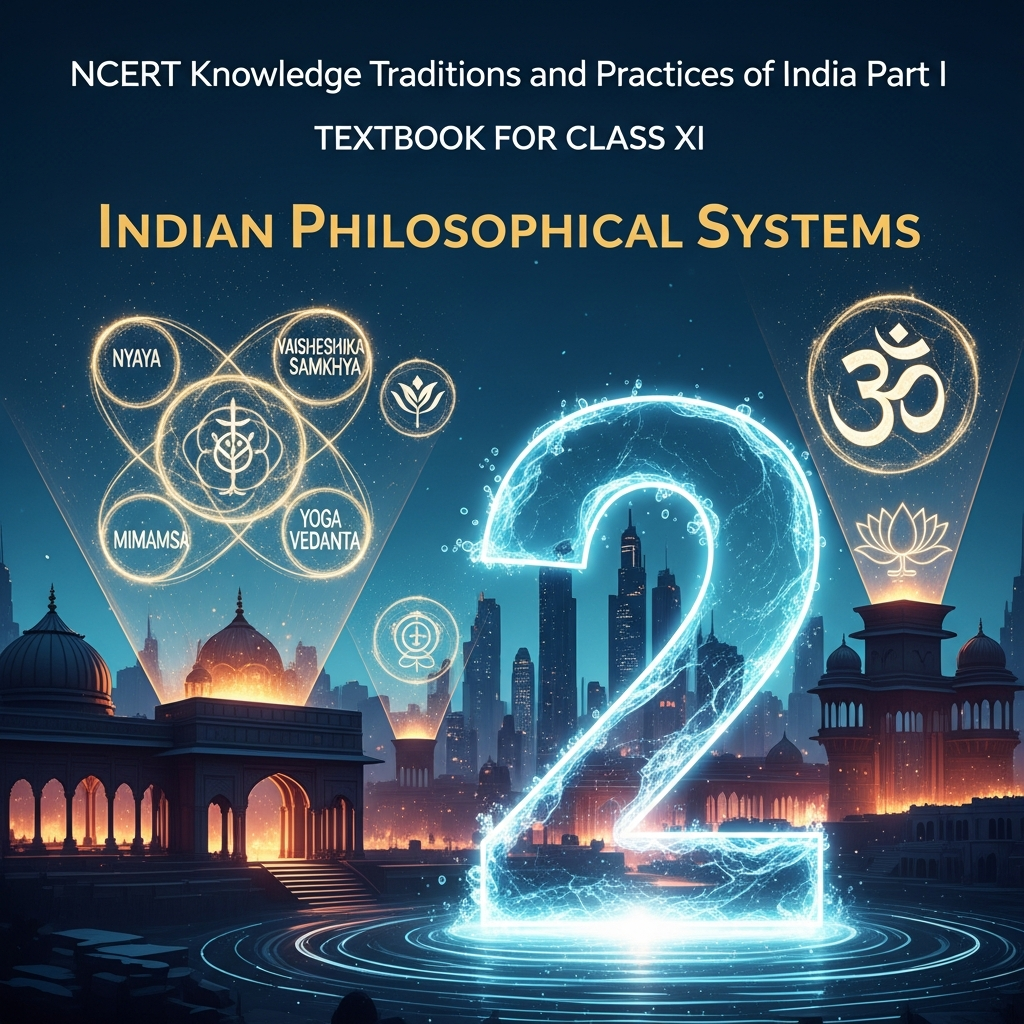
Knowledge Traditions and Practices of India Part I – Indian Philosophical Systems (Chapter 2)
Comprehensive overview of Indian Philosophical Systems from NCERT Class XI textbook, including origins, major schools (Stika and Nstika), key concepts, philosophers, and their contributions—along with exercises and glossary from Chapter 2.
Updated: 8 months ago
Categories: NCERT, Class XI, Knowledge Traditions and Practices of India, Chapter 2, Indian Philosophical Systems, Philosophy, Indian Culture, Literature, Education
Tags: Indian Philosophical Systems, NCERT Class 11, Indian Philosophy, Stika Schools, Nstika Schools, Sankhya, Yoga, Nyaya, Vaisheshika, Mimamsa, Vedanta, Carvaka, Jainism, Buddhism, Philosophical Concepts, Pramana, Moksha, Darana, Indian Culture, Textbook, Chapter 2
Indian Philosophical Systems - Class 11 Philosophy Chapter 2 Ultimate Study Guide 2025
Indian Philosophical Systems
Chapter 2: Knowledge Traditions and Practices of India - Ultimate Study Guide | NCERT Class 11 Notes, Questions, Examples & Quiz 2025
Full Chapter Summary & Detailed Notes - Indian Philosophical Systems Class 11 NCERT
Overview & Key Concepts
Chapter Goal: Introduce Darshana (Philosophy) as inquiry into creation, knowledge sources (Pramana), and liberation (Moksha). Exam Focus: Astika (6 orthodox: Sankhya-Yoga, Nyaya-Vaisheshika, Mimamsa-Vedanta) vs Nastika (3 heterodox: Carvaka, Jain, Buddha); Pramanas; Sufferings (Adhidaivika, etc.). 2025 Updates: Interfaith harmony, modern ethics links. Fun Fact: Rigveda hymns predate Greek philosophy. Core Idea: Ignorance causes suffering; knowledge leads to Moksha.
Group: Debate Astika vs Nastika; individual: School report with quotes.
Debate: Materialism (Carvaka) in modern world.
Ethical role-play: Ahimsa application.
Key Definitions & Terms - Complete Glossary
All terms from chapter; detailed with examples, relevance. Expanded: 30+ terms grouped by subtopic; added advanced like "Anekantavada", "Gunas" for depth/easy flashcards. Table overflow fixed with word-break.
Darshana
Vision of reality/philosophy. Ex: Inquiry into creation. Relevance: Subject of Indian systems.
Pramana
Means of knowledge. Ex: Pratyaksha (perception). Relevance: Validates truth.
Prameya
Objects of knowledge. Ex: Atman, Ishvara. Relevance: Metaphysical focus.
Yoga definition. Ex: Mind restraint. Relevance: Core practice.
Tip: Group by Astika/Nastika; examples for recall. Depth: Debates (e.g., God existence). Errors: Confuse schools. Interlinks: To ethics chapters. Advanced: Sutra analysis. Real-Life: Ahimsa in law. Graphs: School timelines. Coherent: Evidence → Doctrine. For easy learning: Flashcard per term with example.
Text Book Questions & Answers - NCERT Exercises
Direct from chapter exercises (pages 34-35). Answers based on chapter content, point-wise for exams.
1. Answer in one sentence
(a) Name any three orthodox schools of Indian philosophy.
Answer:
Sankhya, Yoga, Nyaya.
(b) Who is the propounder of Advaita Vedānta?
Answer:
Adi Shankara.
(c) What is the meaning of Darśana?
Answer:
Vision or philosophy inquiring into reality and knowledge.
(d) Name any five major Pramāṇas of Indian philosophy.
Answer:
Pratyaksha, Anumana, Upamana, Sabda, Anupalabdhi.
(e) Who is the author of Tattvārthādhigama Sūtra?
Answer:
Umasvati.
2. Write answers briefly
(a) What do you mean by Indian philosophy?
Answer:
Study of Darshana addressing creation, knowledge validation, and Moksha via Prameya/Pramana.
(b) Define Mokṣa according to Jaina philosophy?
Answer:
Complete removal of karmic matter revealing four infinites (knowledge, faith, power, bliss).
(c) Explain the belief of Mi-māṁsā.
Answer:
Rituals (Karma Kanda) for heaven; no God needed; Vedas self-originated; actions bear fruits inherently.
(d) What is the aim of Viśiṣṭādvaita?
Answer:
Qualified monism: Souls distinct from Brahman but part of it; liberation via devotion.
(e) Write any major characteristic of Indian philosophy.
Answer:
Spiritual nature intertwined with religion; karma/rebirth; Moksha as summum bonum.
3. Write short notes on the following
(a) Aṣṭāṅga Yoga
Answer:
8 limbs: Yama (restraints), Niyama (observances), Asana, Pranayama, Pratyahara, Dharana, Dhyana, Samadhi for mind control.
Tip: Practice short notes (Q3); essays (Q4). Full marks: Point-wise, quotes.
Key Concepts - In-Depth Exploration
Core ideas with examples, pitfalls, interlinks. Expanded: All concepts with steps/examples/pitfalls for easy learning. Depth: Debates, analysis. Table overflow fixed.
Pramana Validation
Steps: 1. Direct (senses), 2. Indirect (inference). Ex: Carvaka limits to one. Pitfall: Over-rely on Sabda. Interlink: Schools differ. Depth: Knowledge authenticity.
Advanced: Debate analysis, doctrine catalogs. Pitfalls: School mix. Interlinks: To modern philosophy. Real: Ethics in AI. Depth: 14 concepts details. Examples: Quotes. Graphs: School evolution. Errors: Pramana confusion. Tips: Steps evidence; compare tables (schools/doctrines).
Historical Perspectives - Detailed Guide
Evolution of schools/thoughts; expanded with points; links to origins/debates. Added Vedic timeline, post-Vedic shifts.
Vedic Origins (Rigveda)
Hymns: Nasadiya (creation), Purusha (self).
Upanishads: Philosophical flourish.
Depth: Symbolic universe.
Post-Vedic Independence (6th BC)
Sramana rise; opposition to rituals.
Nastika emerge: Carvaka/Jaina/Buddha.
Depth: Moral logic over faith.
Astika Systems (Sutras Era)
Kapila (Sankhya), Patanjali (Yoga 2nd BC).
Gautama (Nyaya AD 150).
Depth: Complementary pairs.
Medieval Developments
Shankara (Advaita 8th AD), Ramanuja (11th).
Gangesha (Navya-Nyaya 14th).
Depth: Logic refinement.
Modern Influence (2025)
Gandhi (Ahimsa); Vivekananda (harmony).
Global: Yoga/ethics export.
Depth: Interfaith dialogues.
Traditions Parallel
Nigama (Vedic), Agama (Sectarian), Sramana (Ascetic).
Sustained: Only key schools.
Depth: Diversity.
Tip: Link to timelines. Depth: Reflexive origins. Examples: Founders. Graphs: BC-AD chronology. Advanced: Post-2025 global ethics. Easy: Bullets impacts.
Salient Features Examples - From Text with Simple Explanations
Expanded with evidence, interpretations; focus on doctrines, analysis. Added school breakdowns.
Example 1: Carvaka Materialism
Simple Explanation: Sensory reality only.
Step 1: Only Pratyaksha valid.
Step 2: No soul/God; 4 elements.
Step 3: Pleasure = end.
Step 4: Consciousness from matter (decomposition analogy).
Simple Way: See → Enjoy → Die free.
Example 2: Jaina Anekantavada
Simple Explanation: Truth multifaceted.
Step 1: Attributes (guna) permanent.
Step 2: Modes (paryaya) accidental.
Step 3: Partial knowledge due to passions.
Step 4: Triratna dispels.
Simple Way: View → Relate → Liberate.
Example 3: Buddha 4 Truths
Simple Explanation: End suffering systematically.
Step 1: Dukkha (suffering exists).
Step 2: Samudaya (cause: craving).
Step 3: Nirodha (cessation possible).
Step 4: Magga (8-fold path).
Simple Way: See pain → Stop cause → Follow path.
Example 4: Sankhya Dualism
Simple Explanation: Matter vs soul separation.
Step 1: Prakriti (unconscious) evolves.
Step 2: Purusha (conscious) witnesses.
Step 3: Gunas imbalance causes bondage.
Step 4: Knowledge discriminates.
Simple Way: Evolve → Witness → Discern free.
Example 5: Nyaya Logic
Simple Explanation: Debate for truth.
Step 1: 4 Pramanas.
Step 2: 16 categories (debate tools).
Step 3: God creates via atoms.
Step 4: Right knowledge to Apavarga.
Simple Way: Perceive → Infer → Debate clear.
Example 6: Vedanta Maya
Simple Explanation: Illusion hides reality.
Step 1: World as rope-snake (Advaita).
Step 2: Jnana reveals Brahman.
Step 3: Qualified (Vishishtadvaita) or dual (Dvaita).
Step 4: Bhakti/grace liberates.
Simple Way: Delude → Know → Unite eternal.
Tip: Practice doctrine-appreciate; troubleshoot (e.g., Gunas symbolism). Added for schools, paths.
Interactive Quiz - Master Indian Philosophical Systems
10 MCQs in full sentences; 80%+ goal. Covers schools, Pramanas, doctrines.
Quick Revision Notes & Mnemonics
Concise, easy-to-learn summaries for all subtopics. Structured in tables for quick scan: Key points, examples, mnemonics. Covers schools, doctrines. Bold key terms; short phrases for fast reading. Overflow fixed.
Triratna: Faith/Knowledge/Conduct; 8-Fold: Right views etc.
Jaina/Buddha.
T8 (Tri-8). Tip: "Three Rights to Eightfold Way".
Overall Tip: Use PAUSAA-CJB-SYNM-MKG-T8 for full scan (5 mins). Flashcards: Front (term), Back (points + mnemonic). Print table for wall revision. Covers 100% chapter – easy for exams!
Step-by-step breakdowns of core doctrines. Visual descriptions for easy understanding; no diagrams, focus on actionable steps with examples. Overflow fixed in tables.
Process 1: Jaina Karma Removal
Step 1: Asrava (influx via passions).
Step 2: Bandha (bondage obstructs infinites).
Step 3: Samvara (pause via vows).
Step 4: Nirjara (removal via austerity).
Step 5: Moksha (four infinites revealed).
Visual: Influx → Bind → Stop → Burn → Free soul.
Process 2: Buddha 8-Fold Path
Step 1: Right views/aspiration.
Step 2: Right speech/action.
Step 3: Right livelihood/effort.
Step 4: Right mindfulness/concentration.
Step 5: Dispel ignorance to Nirvana.
Visual: See → Speak → Act → Focus → End suffering.