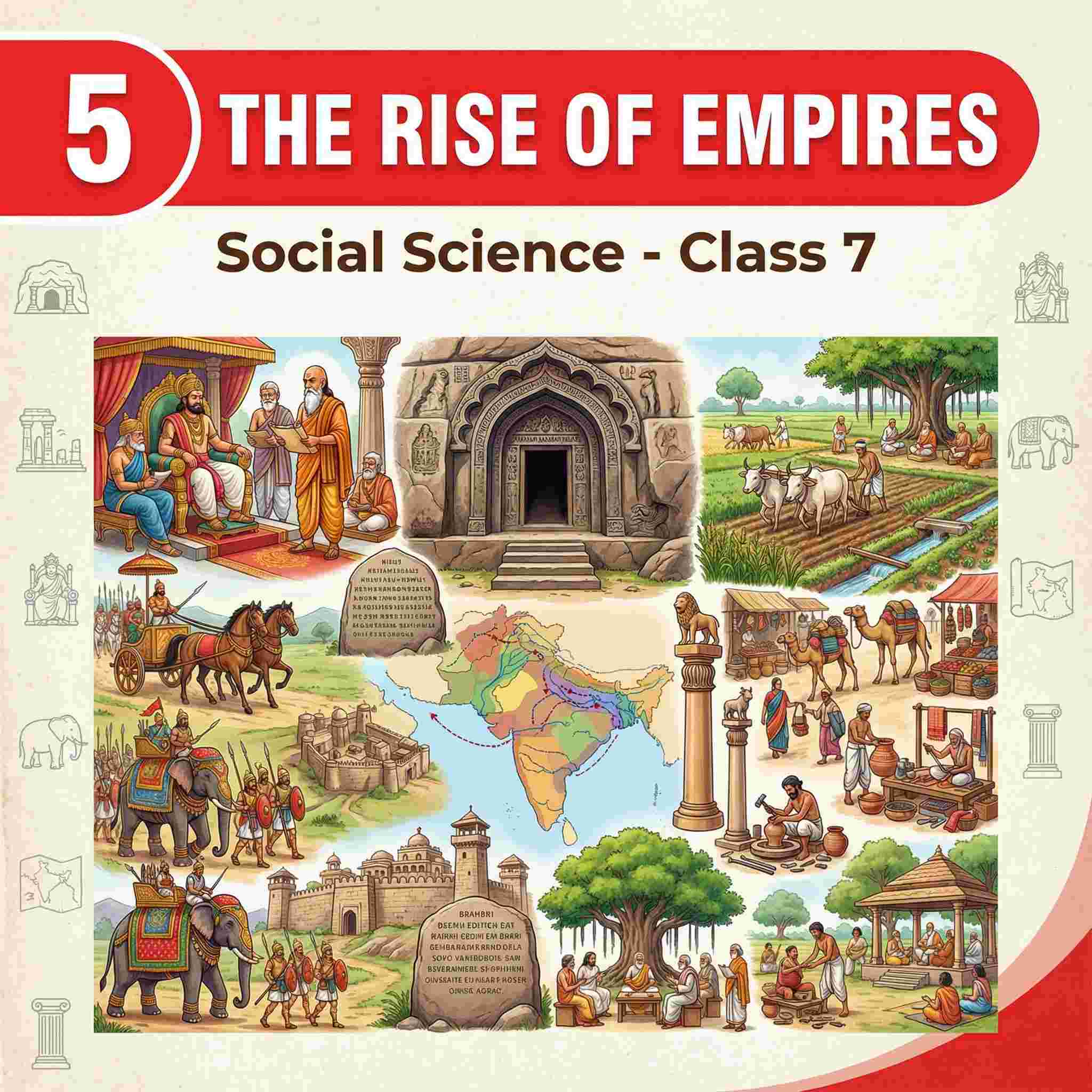
Class 7 Social Science Chapter 5: The Rise of Empires | Meaning of Empire, Features, Pataliputra Story, Tribute, Army, Administration, Trade & Culture
Complete Chapter 5 guide: definition of an empire (imperium, samrāj, rājādhirāja), time‑travel story tour of Pataliputra with forts, moats, caves and markets, how large empires grew from smaller kingdoms using war, resources and trade routes, key features of an empire (central authority, tributary kings, army, administration, taxes, roads and navigation, promotion of art and learning), and how empires reshaped political, economic, social and cultural life, with exam-focused summary, Q&A, extra questions and quiz for CBSE Exam
Updated : 6 months ago
Categories: Class 7 Social Science, NCERT Notes, Ancient Indian History, Rise of Empires, Pataliputra & Mauryan Age Prep, Political Systems & Administration, CBSE Exam Preparation, Q&A and Quizzes
 View Complete Article

