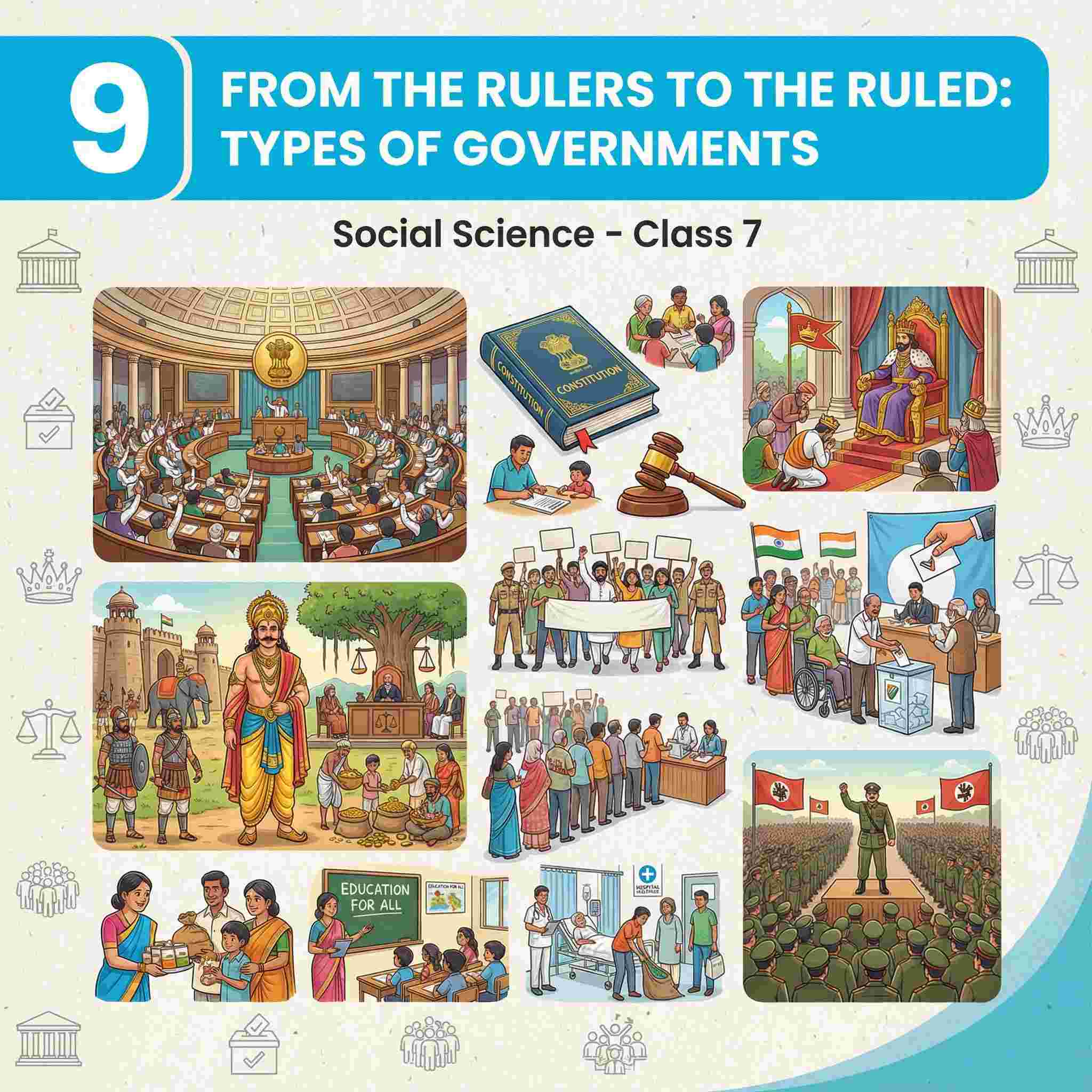
Class 7 Social Science Chapter 9: From the Rulers to the Ruled – Types of Governments | Democracy, Monarchy, Theocracy, Dictatorship, Fundamental Rights & Participation
Complete Chapter 9 guide: what government is and what it does, detailed meaning of democracy as “rule of the people” with school committee example, three functions of government (legislative, executive, judiciary), key differences between systems (who gives power, how govt is formed, parts of govt, aims), core democratic principles (equality, freedoms, representation, universal adult franchise, independent judiciary, rights), and overview of forms like direct democracy, representative democracy, monarchy and theocracy, with exam-focused summary, Q&A, extra questions and quiz for CBSE Exam
Updated : 6 months ago
Categories: Class 7 Social Science, NCERT Notes, Civics & Governance, Types of Government, Democracy & Constitution, CBSE Exam Preparation, Q&A and Quizzes
 View Complete Article

