All Articles on page 1

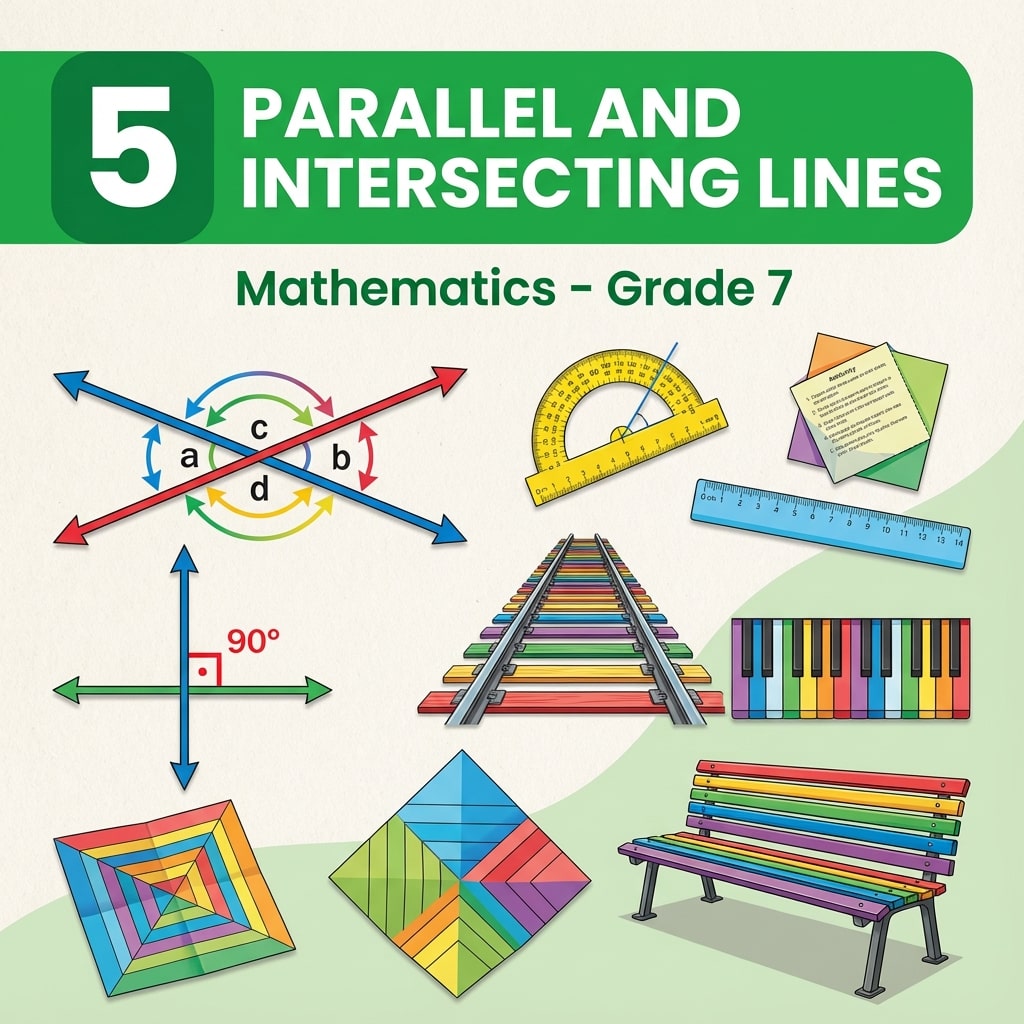
Class 7 Maths Ch 5: Parallel and Intersecting Lines – learn intersecting, linear pair, vertically opposite, perpendicular and parallel lines with intuitive activities, notes, solved examples and quiz for CBSE Exam
Complete Chapter 5 guide: understanding lines on a plane (tables, paper, boards), intersecting lines and the four angles they form, linear pairs that sum to 180° and vertically opposite angles that are always equal, perpendicular lines forming right angles, and parallel lines that never meet, with hands‑on paper‑folding activities, real‑life examples, reasoning‑based “proof” ideas and practice questions for CBSE Class 7 Maths
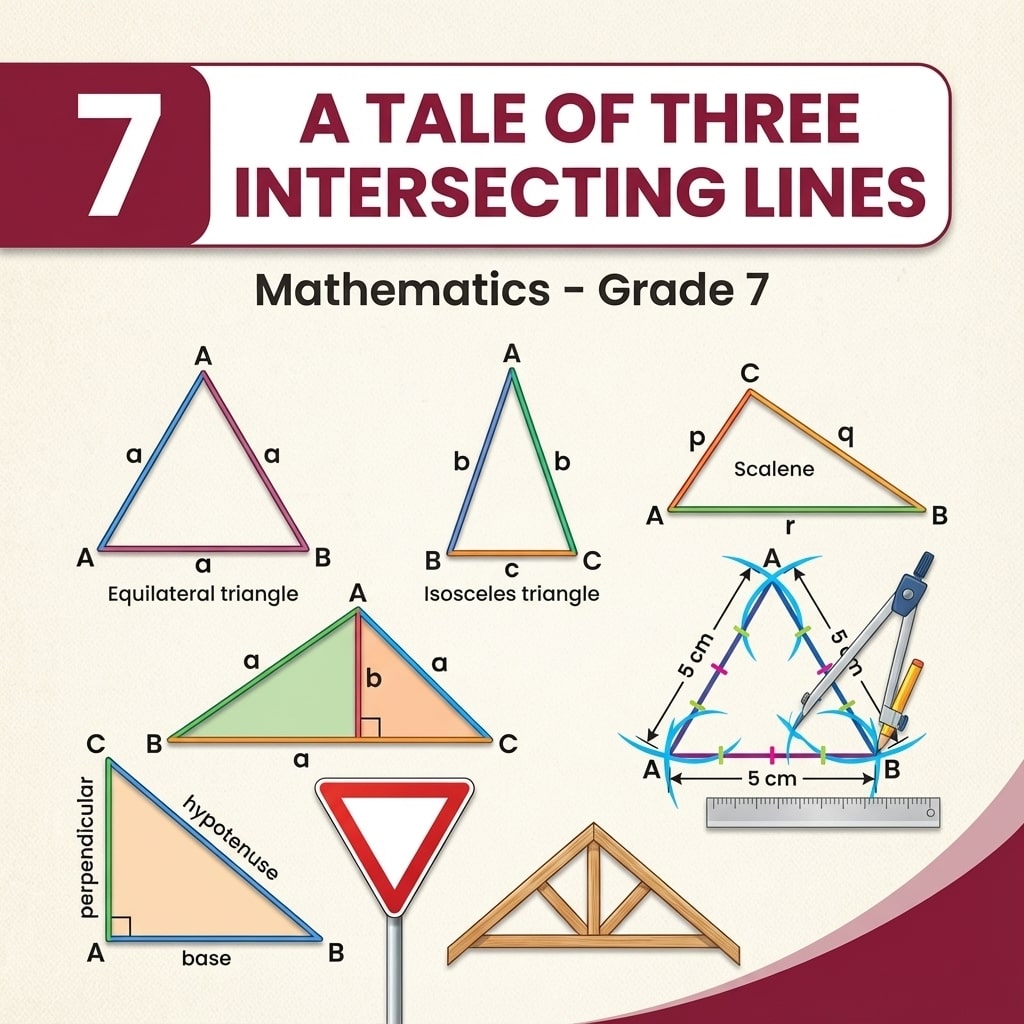
Class 7 Maths Ch 7: A Tale of Three Intersecting Lines – learn to construct and analyse triangles, use triangle inequality, angle sum and exterior angle properties, and draw altitudes, with clear notes, solved examples and quiz for CBSE Exam
Complete Chapter 7 guide: basics of triangles (sides, vertices, angles, naming), constructing equilateral and general triangles using ruler and compass, when a triangle is possible or impossible (triangle inequality with tent–tree–pole story), finding the third angle using a parallel line and proving angle sum property ∠A+∠B+∠C=180°, exterior angles equal to the sum of two interior opposite angles, and altitudes/heights of a triangle with paper‑folding and set‑square constructions, plus solved examples and practice for CBSE Class 7 Maths
Class 7 Maths Ch 6: Number Play – explore fun puzzles with heights, even–odd parity, grids and algebraic expressions to build strong number sense, with notes, solved reasoning questions and quiz for CBSE Exam
Complete Chapter 6 guide: fun “height code” game where children call out numbers based on taller classmates, reasoning with statements that are always / sometimes / never true, deep dive into even and odd numbers (parity) using puzzles like “sum to 30” cards and consecutive ages, parity of coin collections and rectangle grids, and exploring parity of algebraic expressions like 3n+4, nth even/odd numbers and sequences, with brain‑teaser style questions and solutions for CBSE Class 7 Maths
Class 7 Maths Ch 4: Expressions Using Letter‑Numbers – learn basic algebra with variables, write and simplify expressions from real‑life patterns and formulas, with notes, solved examples, extra questions and quiz for CBSE Exam
Complete Chapter 4 guide: idea of letter‑numbers (variables) and algebraic expressions, writing expressions from stories (ages, matchstick patterns, laddus, perimeter, money), using formulas like s = a + 3 or perimeter expressions, building and simplifying expressions by combining like terms, and modelling real‑life patterns with algebra (snail in a well, cycling practice, trains, traffic lights, grids), plus solved examples, practice questions and puzzles for CBSE Class 7 Maths

Alerts and Updates for GATE Ecology and Evolution
Stay up-to-date with the latest news and updates for the GATE Ecology and Evolution exam
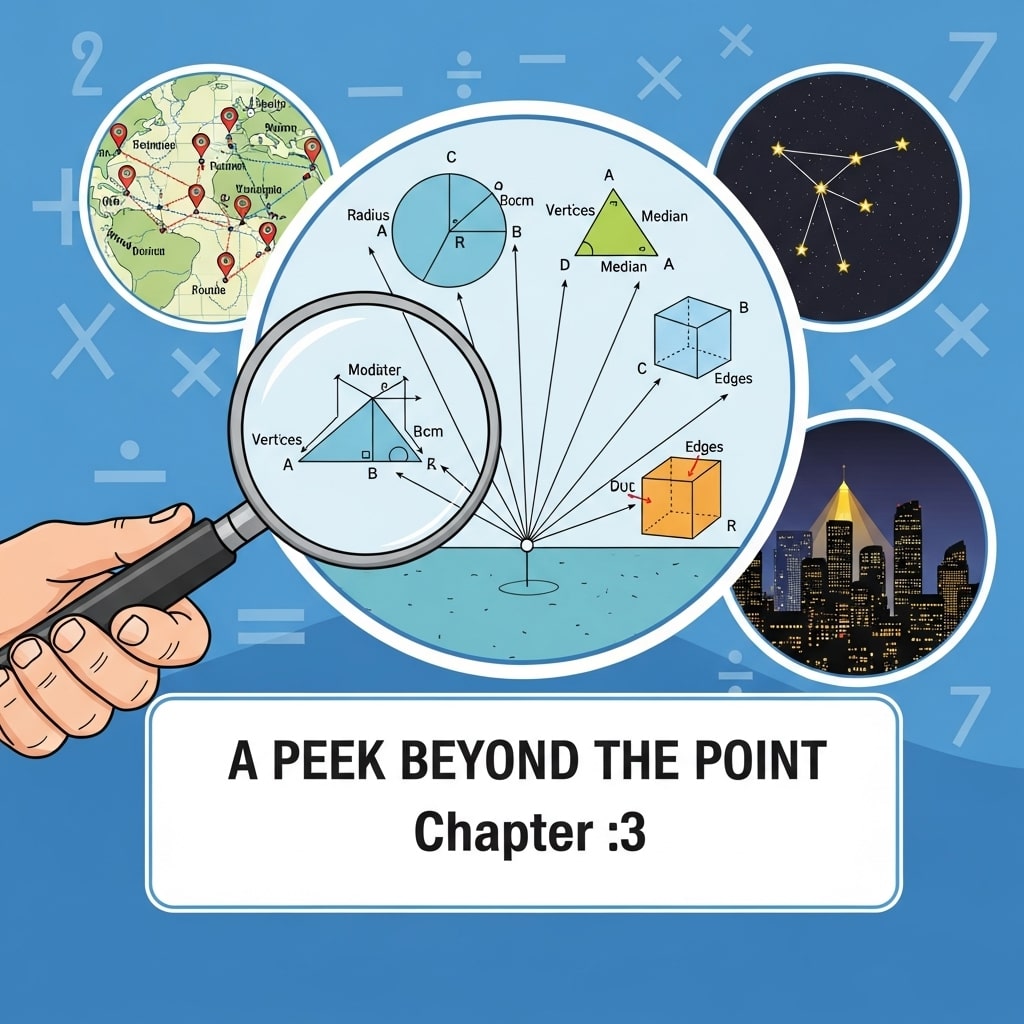
Class 7 Maths Ch 3: A Peek Beyond the Point – understand decimals (tenths, hundredths), compare and operate with them, see real‑life uses and history, with notes, solved sums, extra questions and quiz for CBSE Exam
Complete Chapter 3 guide: why smaller units like tenths and hundredths are needed (measuring screws, pencils, body parts), reading and writing decimals as fractions and on number lines, comparing and ordering decimal numbers, adding and subtracting decimals through place value, decimal sequences and estimation, common decimal mistakes in real life (time, units, medicine, money) and a short history of decimal notation, plus solved examples, practice questions and puzzles for CBSE Class 7 Maths
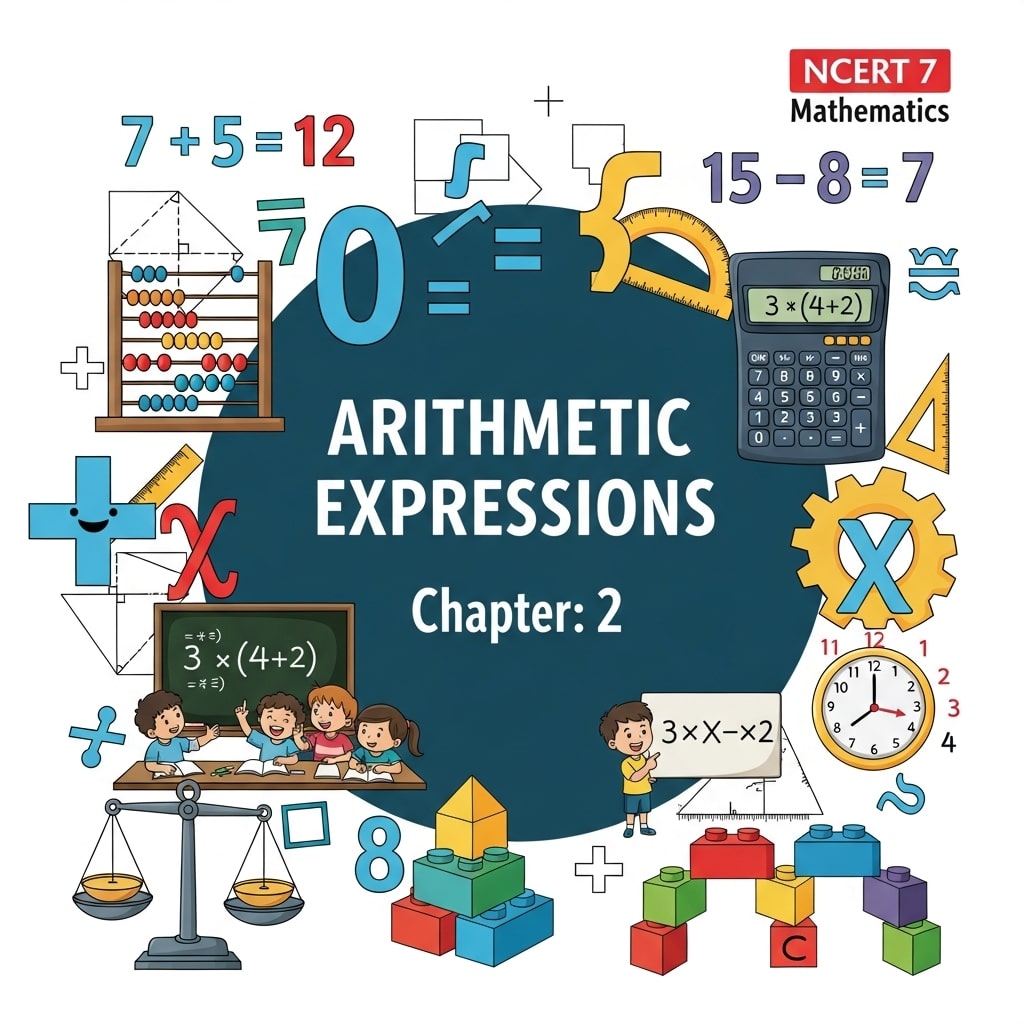
Class 7 Maths Ch 2: Arithmetic Expressions – learn to write, compare and correctly evaluate expressions using brackets and order of operations, with clear notes, solved examples, extra questions and quiz for CBSE Exam
Complete Chapter 2 guide: meaning of arithmetic expressions (addition, subtraction, multiplication, division), writing expressions from stories (daily spending, marbles, shopping), comparing expressions using >, <, = without long calculations, reading and evaluating complex expressions, correct order of operations using brackets, and avoiding common mistakes, plus solved examples, practice questions and puzzles for CBSE Class 7 Maths
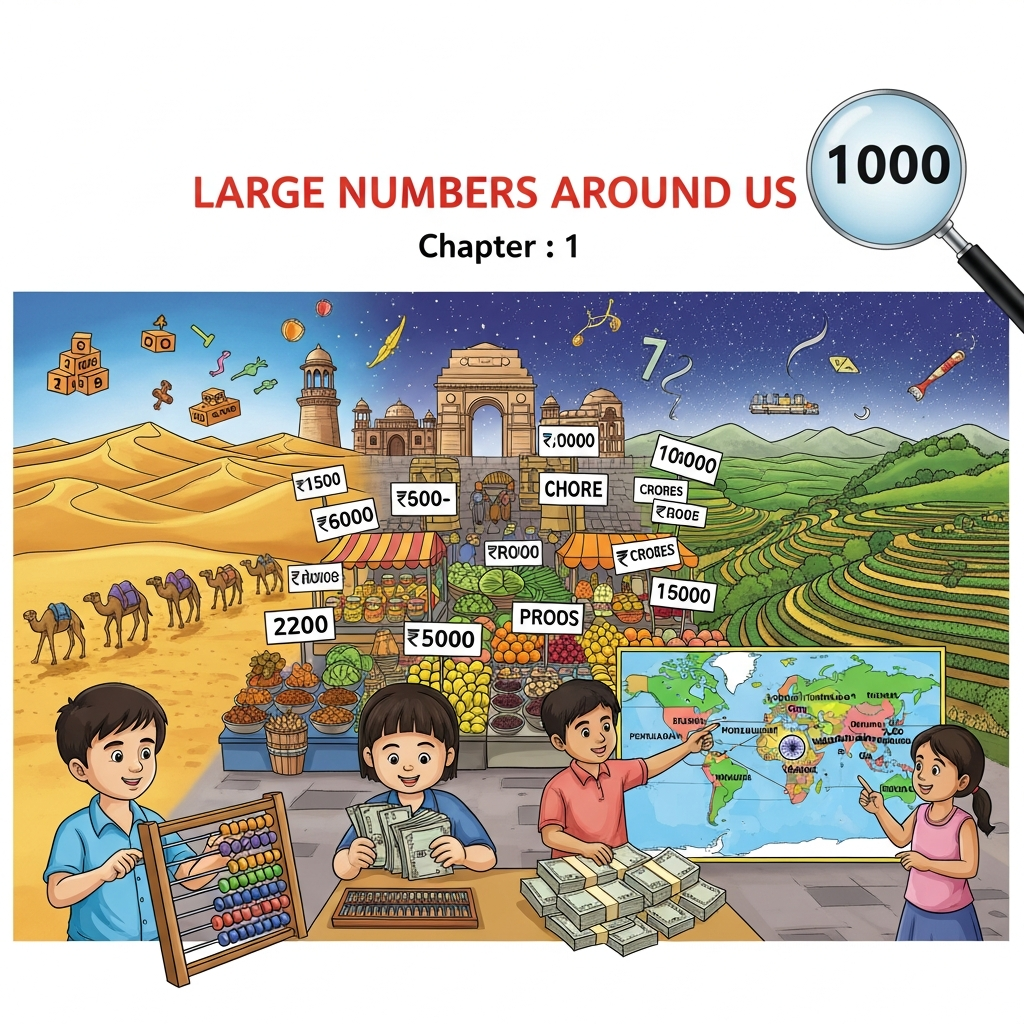
Class 7 Maths Ch 1: Large Numbers Around Us – learn lakhs, crores, place value, estimation and factorisation through stories and puzzles, with notes, solved sums, extra questions and quiz for CBSE Exam
Complete Chapter 1 guide: understanding one lakh and other large numbers using real‑life stories (rice varieties, populations, heights, waterfalls, travel distances), Indian and international place value systems, reading and writing large numbers in words and figures, comparing and estimating big quantities, simple factorisation and regrouping to make multiplication easier, plus solved examples, practice questions, word problems and puzzles (Land of Tens calculators, toothpick digits) for CBSE Class 7 Math
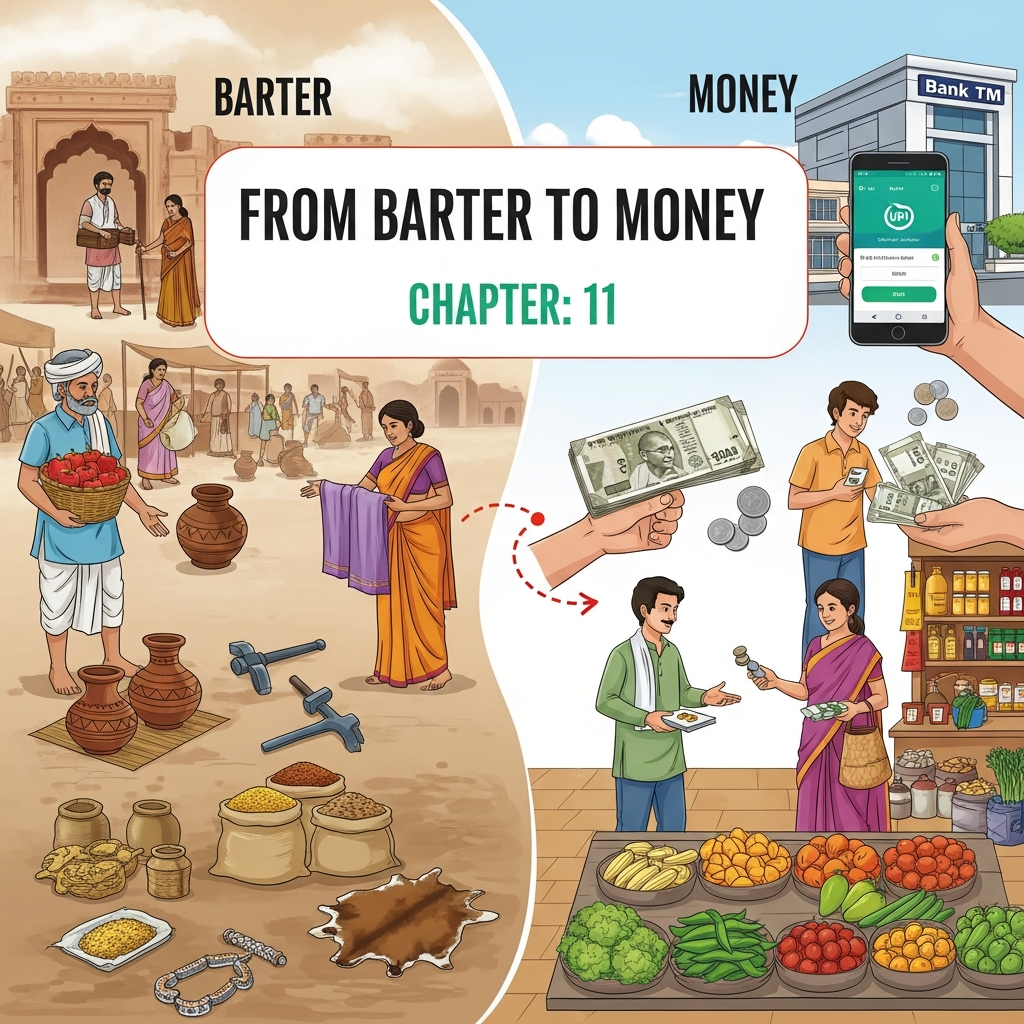
Class 7 Social Science Chapter 11: From Barter to Money | Barter System Problems, Need for Money, Double Coincidence of Wants, Properties & Forms of Money
Complete Chapter 11 guide: how people exchanged goods in the barter system, real problems like double coincidence of wants, lack of standard value, divisibility, portability and durability, why money was invented as a common medium of exchange, early “money” objects (cowries, salt, cattle, metal objects, Rai stones, feather coils), and how modern money includes coins, notes and digital payments, with story-based examples (farmer, Junbeel Mela) plus summary, Q&A, extra questions and quiz for CBSE Exam
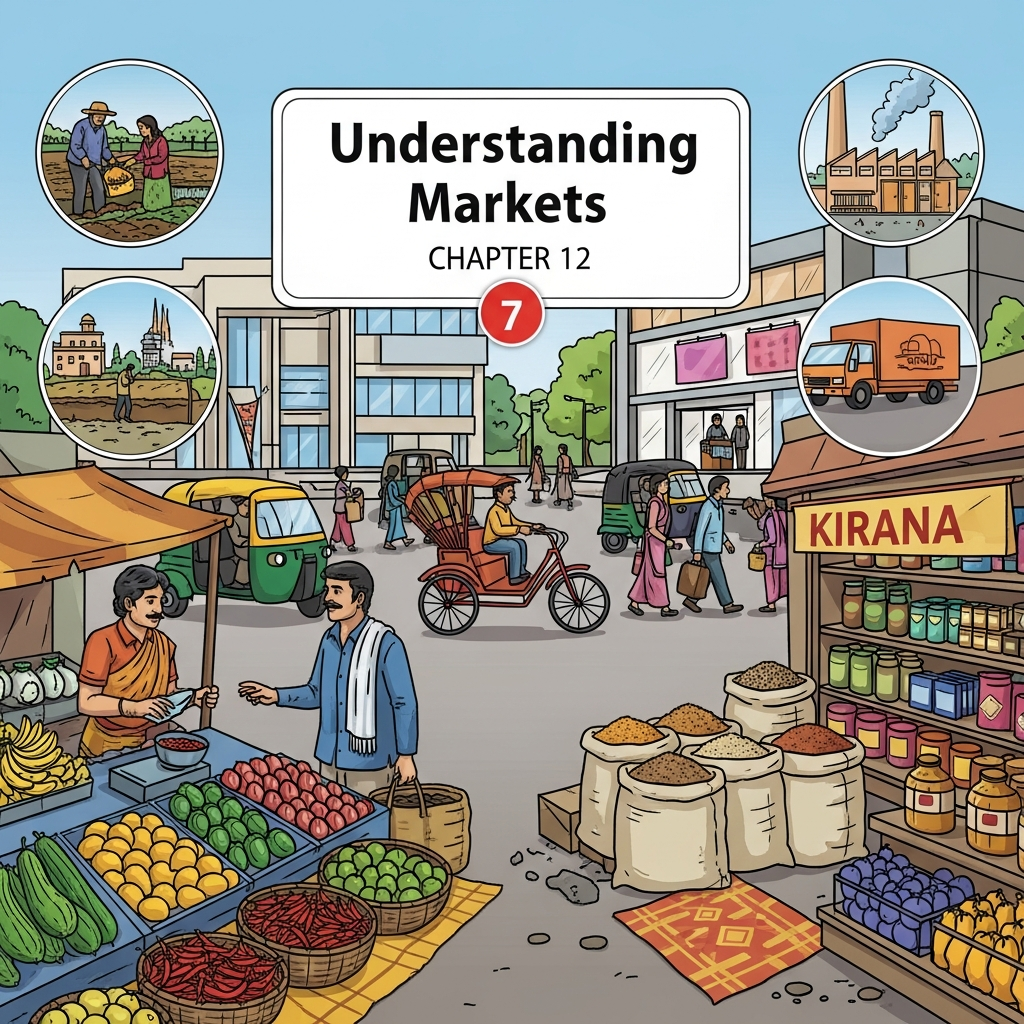
Class 7 Social Science Chapter 12: Understanding Markets | What Markets Are, How Prices Are Set, Types of Markets (Weekly, Malls, Online) & Role of Government
Complete Chapter 12 guide: meaning of markets and why people need them, Hampi Bazaar as a historic market example, key features of any market (buyers, sellers, negotiation and price), how demand and supply interact to fix a “just right” price, different kinds of markets around us (weekly haats, local shops, malls, online/e‑commerce), how goods move from producers to consumers, and the role of government rules and consumer awareness in keeping markets fair, with summary, Q&A, extra questions and quiz for CBSE Exam
Complete Summary and Explanation of Exploring Substances: Acidic, Basic, and Neutral – NCERT Class 7 Science Chapter 2 – Full Chapter Notes, Key Concepts, Activities, Natural Indicators, Litmus Test, Science Fair Invisible Ink, and Textbook Solutions
A comprehensive, easy-to-understand explanation of NCERT Class 7 Science Chapter 2 – Exploring Substances: Acidic, Basic, and Neutral. Covers National Science Day science fair story, litmus as natural indicator, how to identify acids, bases & neutral substances, preparation of lime water, turmeric & red cabbage as indicators, invisible ink magic, colour changes with red rose extract, plus all textbook activities (Activity 2.1), tables, Let Us Enhance Our Learning (Page 14–16) questions with answers, and exam-ready notes in simple language.

Complete Summary and Explanation of The Ever-Evolving World of Science – NCERT Class 7 Science Chapter 1 – Full Chapter Notes, Concepts, Activities, and Solution
A detailed, student-friendly explanation of NCERT Class 7 Science Chapter 1, ‘The Ever-Evolving World of Science,’ covering curiosity, scientific thinking, real-life observations, experiments, natural changes, metals and non-metals introduction, heat flow, water cycle, light, shadows, measurement of time, day and night, and the interconnected nature of science. Includes all NCERT activities, solutions, key points, and simplified notes for easy learning.

Alerts and Updates for GATE Geomatics Engineering
Stay up-to-date with the latest news and updates for the GATE Geomatics Engineering exam

Complete Summary and Explanation of Electricity: Circuits and their Components – Curiosity/NCRT Class 7 Science Chapter 3 – Full Chapter Notes, Torchlight Activity, Uses of Electricity, Safety Rules, Components, and Solutions
A detailed, super-easy and student-friendly explanation of Curiosity Class 7 Science Chapter 3 “Electricity: Circuits and their Components” covering school trip to Bhakra Nangal Dam, uses of electricity in daily life (cooking, lighting, transportation, heating-cooling, entertainment, communication, others), sources of electricity (hydroelectric, wind, solar), danger of touching electric poles and mains supply, why we must use only cells/batteries for experiments, torchlight exploration (Activity 3.1), parts of a torch (cell, bulb, switch, reflector, spring, metal strips), why the bulb glows only in one switch position, open & closed circuit concept, how a torch produces light, precautions, and all textbook questions & answers.
Class 7 Science Chapter 6: Adolescence A Stage of Growth and Change | Complete NCERT Notes, Activities, 25+ Questions & Answers
Complete Guide: Puberty Changes, Secondary Sexual Characteristics, Menstrual Cycle (28-30 days), Adam's Apple, Acne Treatment, Emotional Changes, Nutrition Tips, Menstrual Hygiene, Substance Abuse Prevention, Government Schemes (MHS, RKSK), All NCERT Activities Solved + 25+ Practice Questions & Answers for CBSE Board Exams
Class 7 Science Chapter 5: Changes Around Us Physical and Chemical | Complete NCERT Notes, Activities, 25+ Questions & Answers
Full Chapter Summary, Physical vs Chemical Changes, Reversible/Irreversible, All Activities 5.1-5.8 Solved Step-by-Step, NCERT "Let Us Enhance Our Learning" Questions, 25+ Extra Practice Questions & Answers, Fire Triangle, Rusting, Weathering, Revision Tables, Mnemonics for CBSE Board Exams
Class 7 Science Chapter 4: The World of Metals and Non-metals | Complete NCERT Notes, Activities, Questions & Answers
Full Chapter Summary with Properties Tables, All Activities 4.1-4.8 Solved Step-by-Step, NCERT "Let Us Enhance Our Learning" Questions, 20+ Extra Practice Questions & Answers, Quick Revision Notes, Mnemonics, Real-Life Examples for CBSE Board Exams

Class 7 Science Chapter 7: Heat Transfer in Nature | Complete NCERT Notes, Activities 7.1-7.5 Solved, Conduction Convection Radiation, Land Sea Breeze, Water Cycle
Complete Chapter 7 Guide: Conduction (Metal Strip Pins Activity), Convection (Coloured Water, Land-Sea Breeze), Radiation (Sun Heat, Light/Dark Clothes), Water Cycle (Evaporation-Precipitation-Aquifers), Activities 7.1-7.5 Step-by-Step Solved, 25+ Practice Questions & Answers, Poor Conductors (Wool-Air-Clay), Exam Revision Notes, Mnemonics for CBSE Board Exams

Class 7 Science Chapter 9: Life Processes in Animals | Complete NCERT Notes, Human Digestion, Respiration, Alimentary Canal, Activity 9.1 Solved
Complete Chapter 9 Guide: Human Digestive System (Mouth→Oesophagus→Stomach→Small Intestine→Large Intestine), Activity 9.1 Saliva on Starch Iodine Test, Respiration (Alveoli Gas Exchange), Breathing Mechanism (Diaphragm+Ribs), Ruminants (Cow Rumination), Birds Gizzard, Gills in Fish, Oral Hygiene, Lime Water CO2 Test, 25+ Practice Questions & Answers, CBSE Board Exams 2025

Class 7 Science Chapter 8: Measurement of Time and Motion | Complete NCERT Notes, Sundial Water Clock Pendulum, Speed Uniform Motion
Complete Chapter 8 Guide: Ancient Timekeeping (Sundial, Water Clock, Hourglass, Candle Clock), Activity 8.1 Water Clock Construction, Simple Pendulum Time Period, Speed = Distance/Time, Uniform vs Non-uniform Motion, SI Unit Second (s), Train Speed Calculations, Average Speed Examples Solved, Olympic Sprint Analysis, CBSE Exam Questions with Solutions

Class 7 Science Chapter 11: Light – Shadows and Reflections | NCERT Notes, Luminous & Non‑Luminous Objects, Straight Line Propagation, Pinhole Camera & Mirror Images,25+ Practice Questions & Answers, CBSE Board Exams
Complete Chapter 11 guide: natural and artificial sources of light (Sun, stars, fire, LEDs), luminous vs non‑luminous objects, light travelling in straight lines (matchbox and pipe activities), formation of shadows (umbra/penumbra), eclipses idea link, simple pinhole camera, reflection from plane mirrors, everyday applications, LED energy saving note, plus exam-oriented definitions, diagrams, and conceptual questions for CBSE
Class 7 Science Chapter 12: Earth, Moon, and the Sun | Rotation, Revolution, Day–Night Cycle, Phases of the Moon, Eclipses & Orbits Explained
Complete Chapter 12 guide: Earth’s rotation (west to east) and 24‑hour day, day–night with globe–torch activity, revolution and year length, seasons overview, phases of the Moon and why only one side is seen, basic idea of solar and lunar eclipses, Foucault pendulum evidence of Earth’s rotation, plus NCERT-style activities, diagrams and exam questions for CBSE
Class 7 Social Science Chapter 10: The Constitution of India – An Introduction | Need for a Constitution, Making of the Indian Constitution, Key Features, Values & Organs of Government
Complete Chapter 10 guide: what a constitution is and why every country needs one, Constitution as the “rulebook” for the nation (kabaddi example), structure of the Indian Constitution (largest written constitution, parts and schedules), key contents—values and ideals, rights and duties, political system, organs of government and their powers, making of the Constitution by the Constituent Assembly (1946–49) with Dr Rajendra Prasad and Drafting Committee under Dr B.R. Ambedkar, and how freedom struggle and civilisational heritage shaped its core principles, with summary, Q&A, extra questions and quiz for CBSE Exam
Class 7 Science Chapter 10: Life Processes in Plants | Complete NCERT Notes, Photosynthesis, Activities 10.1-10.8 Solved, Chlorophyll Starch Test
Complete Chapter 10 Guide: Photosynthesis (Sunlight+Water+CO2+Chlorophyll→Glucose+Oxygen), Activity 10.1 Plant Growth Sunlight Water Test, Activity 10.2 Leaf Starch Iodine Test, Activity 10.3 Green vs Non-Green Leaf Starch, Activity 10.4 CO2 Essential Test, Xylem Water Transport, Phloem Food Transport, Plant Respiration Lime Water Test, Bottle Garden Self-Sustaining Ecosystem, Vrikshayurveda Ancient Knowledge, 25+ Practice Questions & Answers CBSE Exam

Class 7 Social Science Chapter 4: New Beginnings – Cities and States | Second Urbanisation, Janapadas & 16 Mahajanapadas, Early Republics & Fortified Capitals
Complete Chapter 4 guide: India’s Second Urbanisation after the Harappan cities, rise of janapadas and 16 mahajanapadas in the Ganga plains, reasons for their growth (fertile land, iron, trade networks), fortified capitals with moats and narrow gateways, Kautilya’s ideal kingdom features, early democratic traditions in sabhā and samiti, gana‑sangha states like Vajji and Malla as early republics, plus exam-focused summary, maps, Q&A and quiz for CBSE Exam
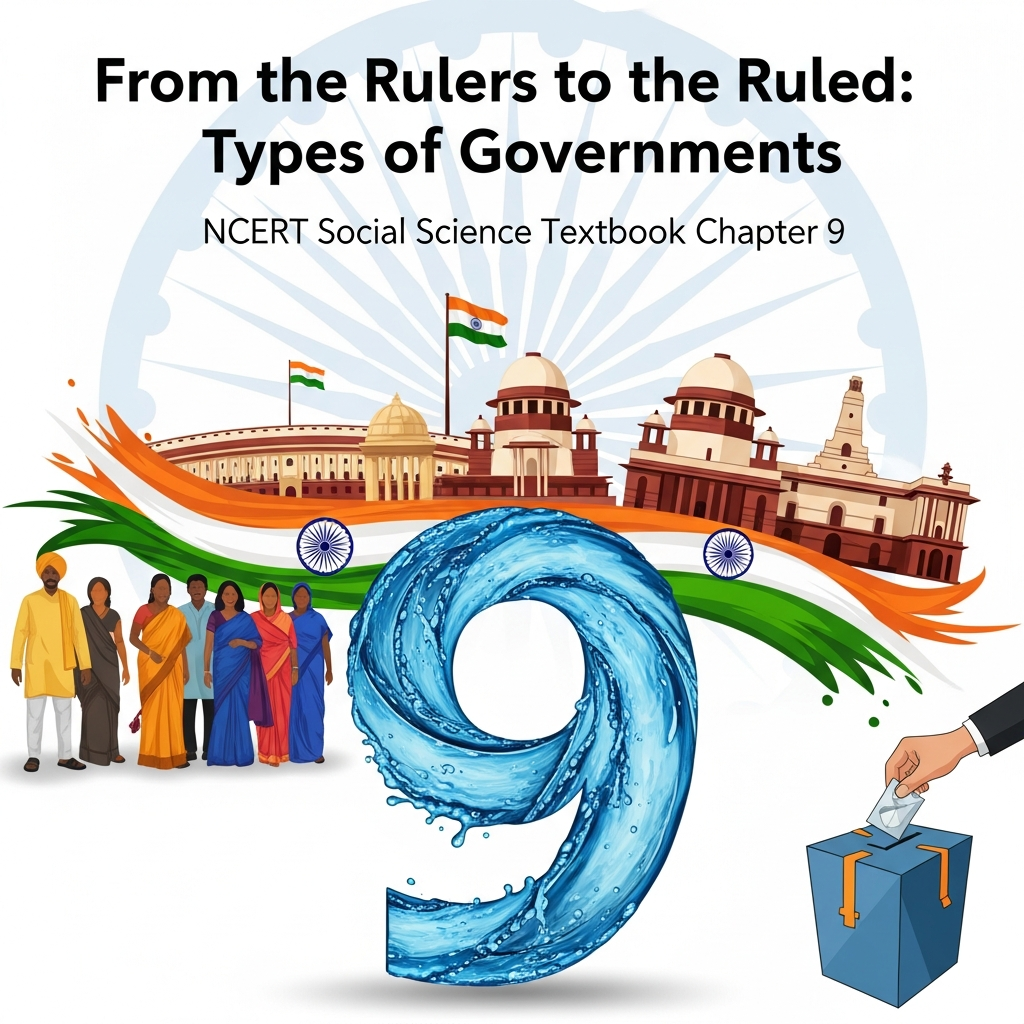
Class 7 Social Science Chapter 9: From the Rulers to the Ruled – Types of Governments | Democracy, Monarchy, Theocracy, Dictatorship, Fundamental Rights & Participation
Complete Chapter 9 guide: what government is and what it does, detailed meaning of democracy as “rule of the people” with school committee example, three functions of government (legislative, executive, judiciary), key differences between systems (who gives power, how govt is formed, parts of govt, aims), core democratic principles (equality, freedoms, representation, universal adult franchise, independent judiciary, rights), and overview of forms like direct democracy, representative democracy, monarchy and theocracy, with exam-focused summary, Q&A, extra questions and quiz for CBSE Exam
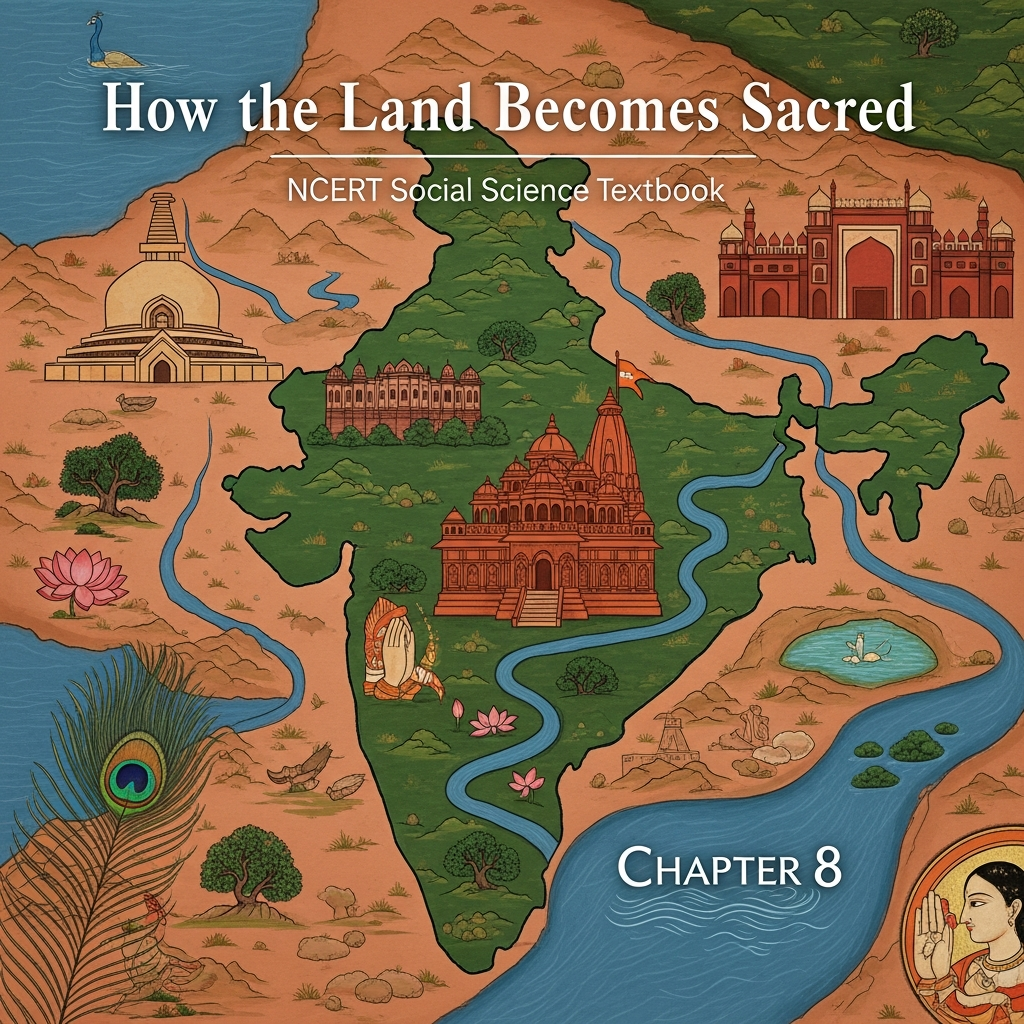
Class 7 Social Science Chapter 8: How the Land Becomes Sacred | Sacred Places, Pilgrimages, Tirtha Networks & Cultural Integration of India
Complete Chapter 8 guide: idea of sacredness and tirtha, sacred sites of different religions (mosques, churches, synagogues, fire temples, stupas, takhts, temples), Buddhist, Jain, Sikh and Hindu pilgrimage traditions, tīrthayātrā as inner and outer journey, long‑distance routes like Rameswaram–Haridwar, Sabarimala trek and Pandharpur wārī, and how centuries of pilgrimages turned India’s geography into a shared sacred space and strengthened “one country, one culture”, with summary, Q&A, extra questions and quiz for CBSE Exam
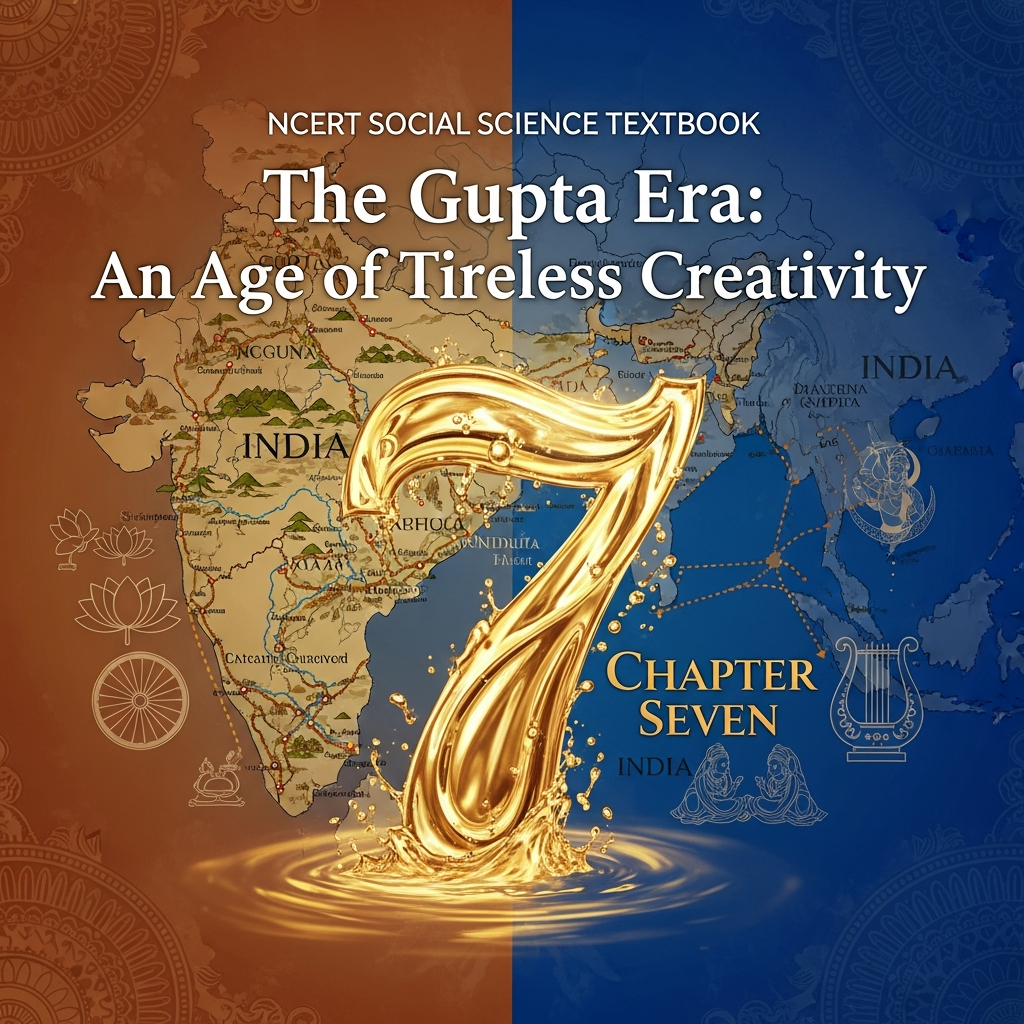
Class 7 Social Science Chapter 7: The Gupta Era – An Age of Tireless Creativity | Gupta Empire, Chandragupta I & II, Samudragupta, Iron Pillar, Golden Age in Art, Science & Literature
Complete Chapter 7 guide: rise of the Gupta dynasty after the Kushanas, expansion under Chandragupta I and the warrior‑king Samudragupta (Prayaga prashasti, veena coin, aśvamedha), Chandragupta II Vikramaditya and the Iron Pillar inscription, contemporary kingdoms Vakataka, Pallava and Kamarupa, flourishing of art, architecture, metallurgy, astronomy, mathematics and classical Sanskrit literature (Kalidasa), with timeline, maps, summary, NCERT-style Q&A, extra questions and quiz for CBSE Exam
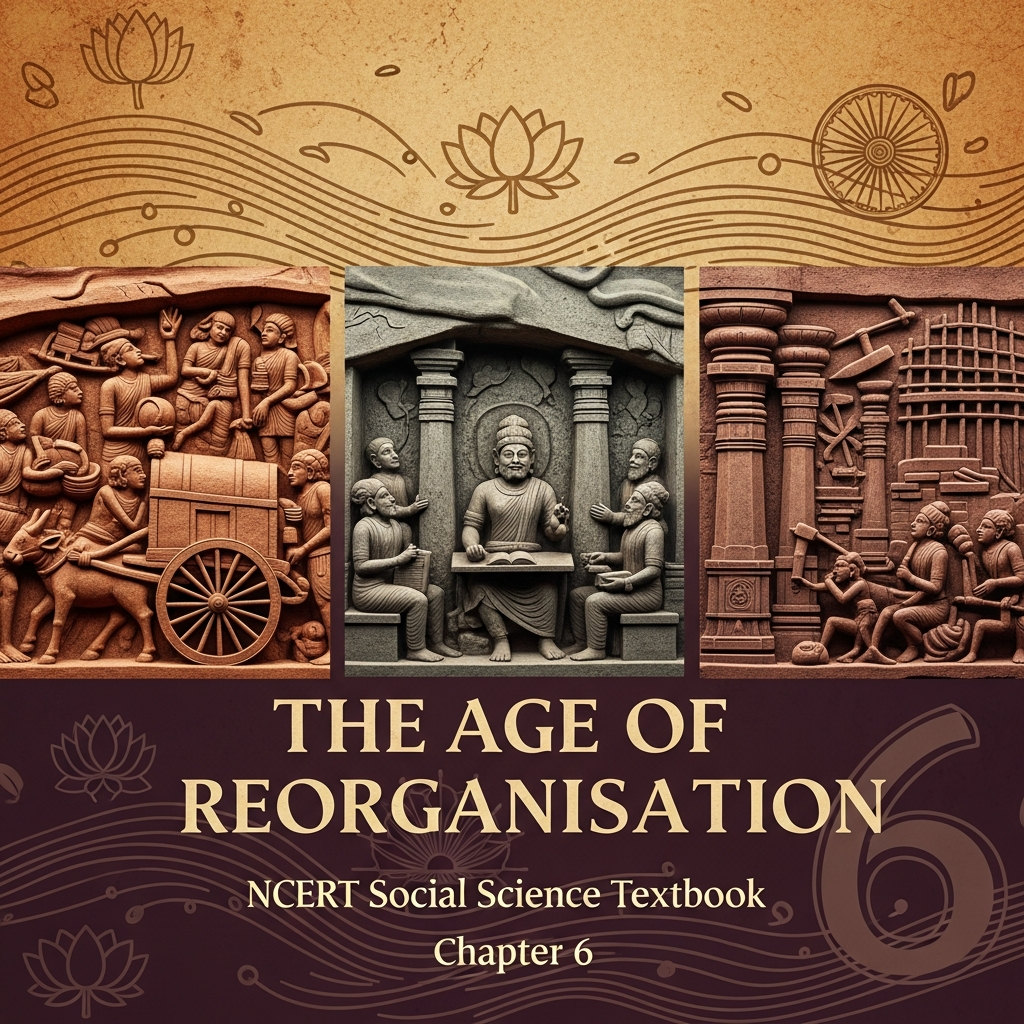
Class 7 Social Science Chapter 6: The Age of Reorganisation | Post‑Mauryan Kingdoms, Shungas & Satavahanas, Indo‑Greeks–Shakas–Kushanas, Sangam Age Chera–Chola–Pandya
Complete Chapter 6 guide: breakup of the Mauryan empire and rise of many new kingdoms, why this period is called the “Age of Reorganisation”, Shunga rule and aśvamedha yajña, Bharhut Stupa and early Buddhist art, Indo‑Greeks, Shakas and Kushanas entering and assimilating into Indian culture, Hathigumpha inscription of Kharavela, southern kingdoms Cheras–Cholas–Pandyas, Sangam Age literature, Karikala’s Kallanai (Grand Anicut) and trade with Romans, plus exam-focused summary, maps, Q&A, extra questions and quiz for CBSE Exam
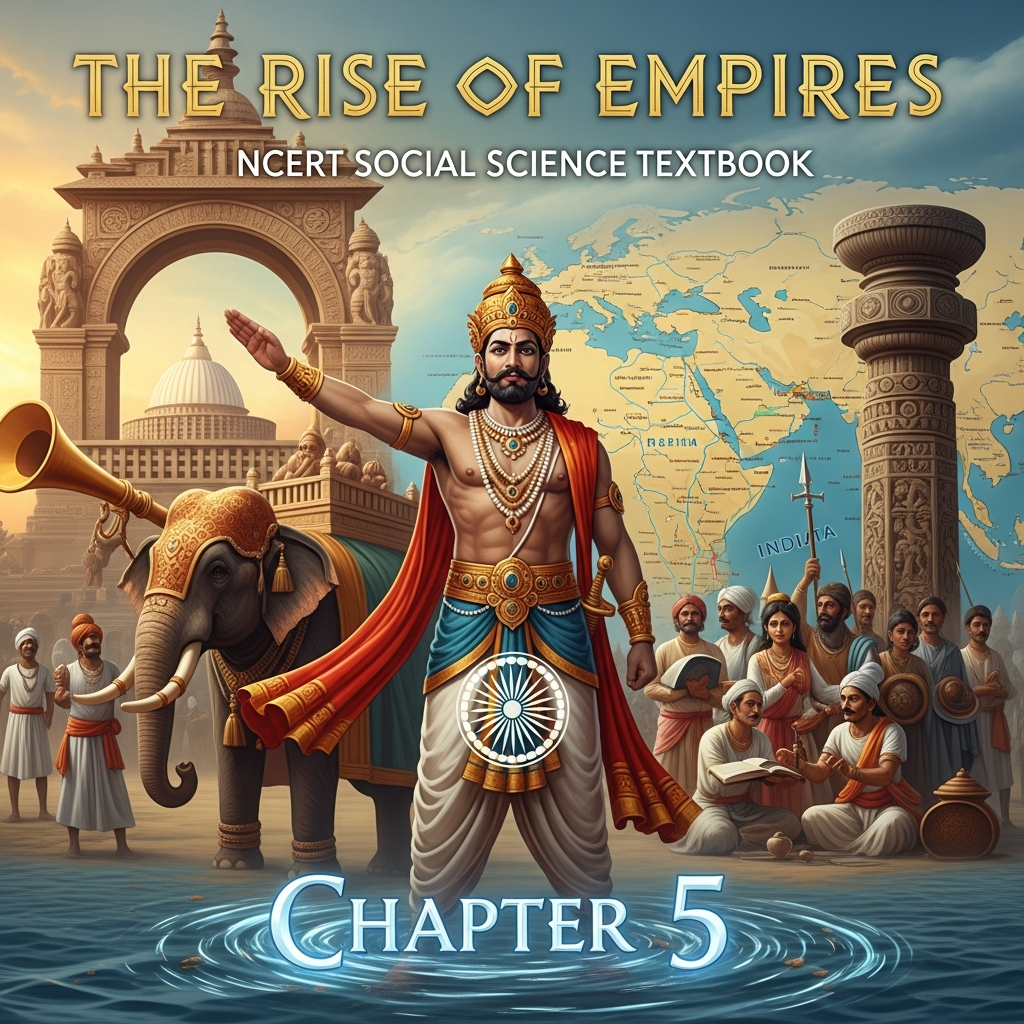
Class 7 Social Science Chapter 5: The Rise of Empires | Meaning of Empire, Features, Pataliputra Story, Tribute, Army, Administration, Trade & Culture
Complete Chapter 5 guide: definition of an empire (imperium, samrāj, rājādhirāja), time‑travel story tour of Pataliputra with forts, moats, caves and markets, how large empires grew from smaller kingdoms using war, resources and trade routes, key features of an empire (central authority, tributary kings, army, administration, taxes, roads and navigation, promotion of art and learning), and how empires reshaped political, economic, social and cultural life, with exam-focused summary, Q&A, extra questions and quiz for CBSE Exam
Class 7 Social Science Chapter 3: Climates of India | Climate vs Weather, Seasons, Monsoon Types, Factors (Latitude, Relief, Distance from Sea), Q&A + Quiz
Complete Chapter 3 guide: difference between weather, seasons and climate, six Indian ritus, major climate types in India (alpine, temperate, subtropical, arid, semi‑arid, tropical wet and dry), role of latitude, sun’s rays and tropics, how climate shapes crops, clothing, festivals and daily life, and how recent human activities are changing climate, with exam-focused summary, NCERT-style questions & answers, extra questions and quiz for CBSE Exam
Class 7 Social Science Chapter 1: Geographical Diversity of India | Complete Notes, Himalayas Himadri Himachal Shivalik, Northern Plains, Thar Desert, Peninsular Plateau
Complete Chapter 1 Guide: India's Physical Features (Himalayas: Himadri-Himachal-Shivalik, Northern Plains Ganga-Indus, Thar Desert, Peninsular Plateau Deccan, Coastal Plains, Islands Andaman Nicobar Lakshadweep), Plate Tectonics (India's Journey from Gondwana), Gaumukh Gangotri Glacier, Kath-kuni Houses, Great Himalayan National Park, Jog Falls Hydroelectricity, Rakesh Sharma Space View, Maps Latitudes Longitudes, 25+ Questions & Activities Solved CBSE Exams
Class 7 Social Science Chapter 2: Understanding the Weather | Complete Notes, Elements of Weather, Instruments, IMD & Traditional Forecasting, Q&A + Quiz
Complete Chapter 2 guide: definition of weather and atmosphere (troposphere), five elements of weather (temperature, precipitation, air pressure, wind, humidity), traditional weather prediction signs (ants, frogs, pine cones), modern meteorology and India Meteorological Department, thermometers and temperature range/mean, plus exam-focused summary, NCERT-style questions and answers, MCQ/quiz and extra practice for CBSE Exam

Alerts and Updates for UGC-NET
Stay up-to-date with the latest news and updates for the UGC-NET exam

Alerts and Updates for GATE Geology and Geophysics
Stay up-to-date with the latest news and updates for the GATE Geology and Geophysics exam

Alerts and Updates for GATE Instrumentation Engineering
Stay up-to-date with the latest news and updates for the GATE Instrumentation Engineering exam

Alerts and Updates for GATE Mathematics
Stay up-to-date with the latest news and updates for the GATE Mathematics exam

Alerts and Updates for GATE Mechanical Engineering
Stay up-to-date with the latest news and updates for the GATE Mechanical Engineering exam

Alerts and Updates for GATE Mining Engineering
Stay up-to-date with the latest news and updates for the GATE Mining Engineering exam
1
Next